Jack Dorsey, co-founder of Twitter and creator of Bluesky, is back with Bitchat, a peer-to-peer Bluetooth messaging service that works without the internet. Designed to be resilient, encrypted, and decentralized, it is part of his ongoing commitment to technology that is independent of large platforms. But can this promise really stand up to the security requirements of next-generation apps such as Olvid and SimpleX Chat?
Bitchat: messaging that applies Bitcoin principles to communication
Jack Dorsey, co-founder of Twitter (now X), has unveiled Bitchat, a new messaging app designed to connect users at close range via Bluetooth, without the need for an internet connection.
In the white paper he published on Github, he explains that he has created a peer-to-peer application that provides “ephemeral, encrypted communications without relying on the Internet infrastructure, making it resistant to network outages and censorship.”
my weekend project to learn about bluetooth mesh networks, relays and store and forward models, message encryption models, and a few other things.
bitchat: bluetooth mesh chat…IRC vibes.
TestFlight: https://t.co/P5zRRX0TB3
GitHub: https://t.co/Yphb3Izm0P pic.twitter.com/yxZxiMfMH2— jack (@jack) July 6, 2025
The stated goal is clear and in line with the editorial line we have come to expect from him: “Bitchat addresses the need for resilient and private communication that does not depend on a centralized infrastructure.”
This project is a continuation of Jack Dorsey’s commitment to more decentralized technology, free from the large centralized platforms of the web.
A staunch supporter of Bitcoin, Jack Dorsey is also behind Bluesky, an initiative launched while he was still CEO of Twitter, with the ambition of developing an open protocol for social networks.
Messaging without the internet, but not without technical constraints
The white paper, published in draft form as Jack Dorsey indicated on X, outlines the project but leaves many questions unanswered about its technical architecture. The upcoming release of the code as open source should provide a better understanding of how it actually works.
The idea is to use the Bluetooth Low Energy protocol to connect phones located in the same geographical area. Each device then becomes a local relay, forming a distributed network capable of reaching, according to the founder, a theoretical range of around 300 meters.
However, this configuration can also be a weakness, as the proliferation of relays considerably increases the attack surface, making it more difficult to secure the network.
The application naturally includes end-to-end encryption, an essential standard for next-generation messaging. It works without creating a user account and guarantees that no personal data will be collected.
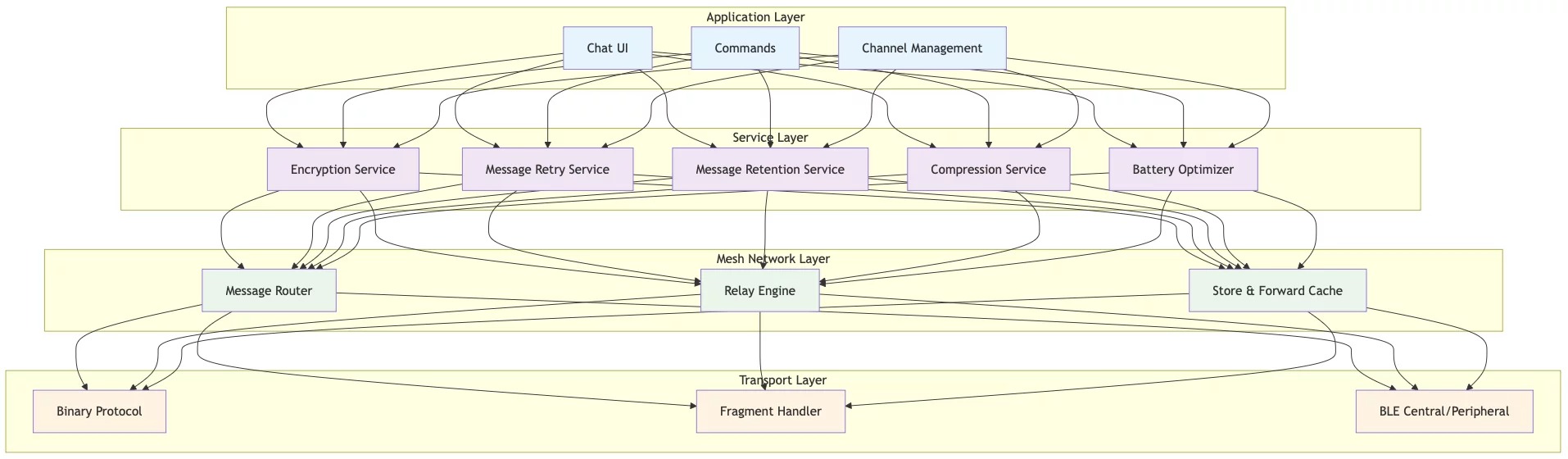
Despite the integration of several privacy mechanisms such as random delays and packet fragmentation, Bitchat seems to overlook a crucial point: user authentication.
The public key exchange system remains vague and basic, with no guarantee that you are communicating with the right person. In addition, in order for two phones to connect via Bluetooth, each device regularly sends a small signal called a “discovery message.”
Other phones nearby listen to these signals to find out which devices are around them. These discovery messages are sent in clear text, which means that any device or person equipped with a tool to listen to these signals can pick them up and find out where a phone is transmitting them from.
These flaws are reminiscent of the risks observed with Bridgefy, particularly man-in-the-middle attacks. Without strong authentication, an attacker can insert themselves between two users and alter the integrity of messages without them realizing it. The app was made available to beta testers via TestFlight, Apple’s platform for installing and evaluating apps in development. The program quickly reached its limit of 10,000 users. In short, apps such as SimpleX Chat and the French flagship Olvid, known for their high security and privacy standards, have nothing to worry about. Bitchat is still a long way from being able to compete in this category.