
Bitcoin miners’ profitability is under pressure as the price of BTC falls and energy costs remain high. Many are attempting a shift to AI and HPC, but this risky transition could weaken the ecosystem if it fails or if the tech bubble bursts.
Bitcoin miners struggling with declining profitability and investments in HPC
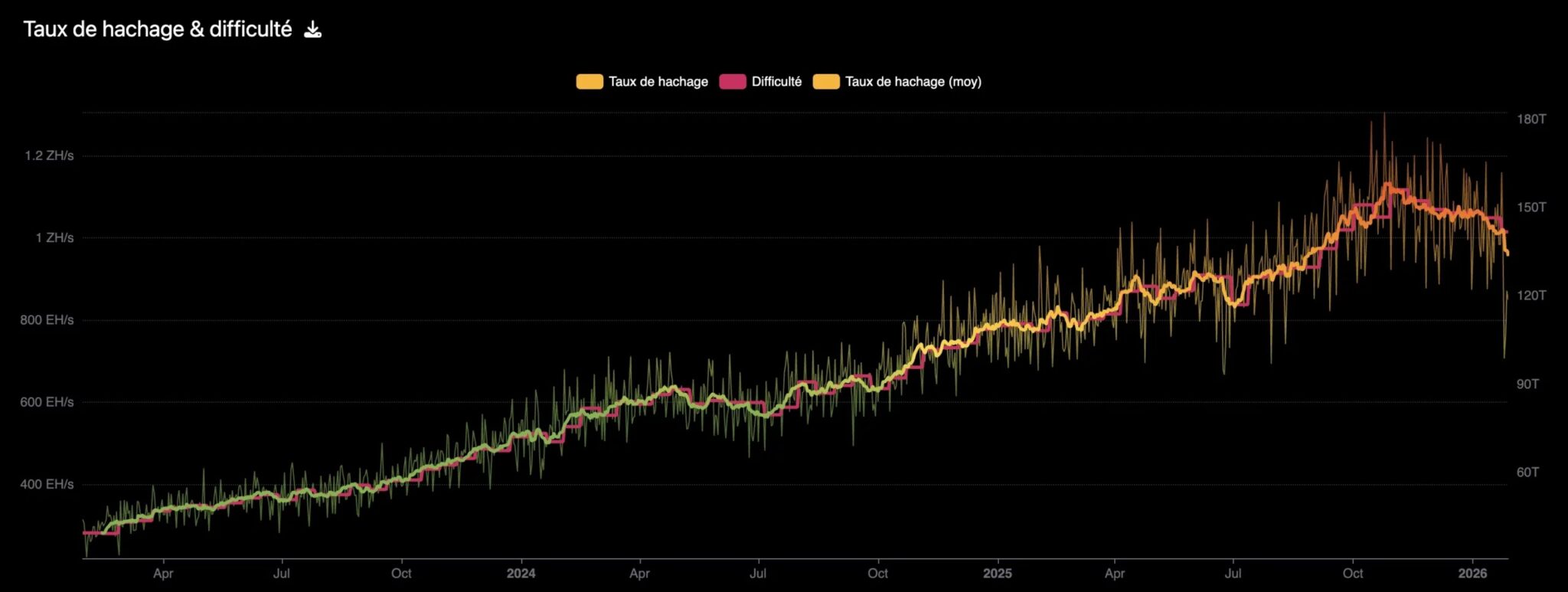
With the price of Bitcoin down 30% from its October 2026 highs, the Bitcoin mining industry is struggling, causing a 15% drop in the blockchain’s hashrate.
The decline in the price of BTC is increasing pressure on miners’ profitability, who must choose between continuing to mine at a loss in the hope of a future rebound or disconnecting the least efficient machines. According to estimates, the average cost of producing a Bitcoin now exceeds $90,000 in some parts of the world.
At the same time, since the craze for artificial intelligence began, Bitcoin miners have started a gradual migration to this new sector, which is theoretically more profitable, investing heavily in high-performance computing (HPC) infrastructure.
However, according to KBW Bank, this transition is far from easy and involves significant investment, as well as an uncertain return on capital and considerable technical complexity.
Caught between energy costs, debt, and a shift in their business model, miners are entering a phase of natural selection. Only the most resilient, those with access to cheap energy or capable of successfully pivoting to AI, are likely to survive this period.
In the short term, this dynamic could lead to a continued decline in hashrate, making the network more vulnerable to 51% attacks. However, even with a 50% drop in hashrate, Bitcoin would remain one of the most secure networks in the world, returning to a hashrate equal to 2024 levels, which were already considered very strong at the time.