
With the proliferation of crypto regulatory frameworks, stablecoin giant Tether stands out as a paradox. Its USDT has just surpassed 500 million users, even as its market share declines in jurisdictions such as the European Union and the United States.
Tether: USDT’s dominance is losing momentum
The regulatory race is on in the world’s major jurisdictions to control—or support—the development of the cryptocurrency sector. This dynamic is now associated with an obvious competitive dimension, as jurisdictions vie to establish themselves as the best home for this Web3 economy.
On the one hand, crypto players are complying with the requirements imposed in order to obtain the necessary approvals. On the other hand, the global leader in the stablecoin market, Tether, finds itself excluded from these new regulatory spaces, with its USDT already considered crypto non grata in the European Union and the United States.
As a result, USDT’s dominance has fallen from over 70% in October last year to just 62.5% today. This significant decline has clearly benefited the competition, such as Circle’s USDC, which has grown by almost 6% to reach 26% over this period, and the Ethena protocol’s USDe, which now exceeds 4%.
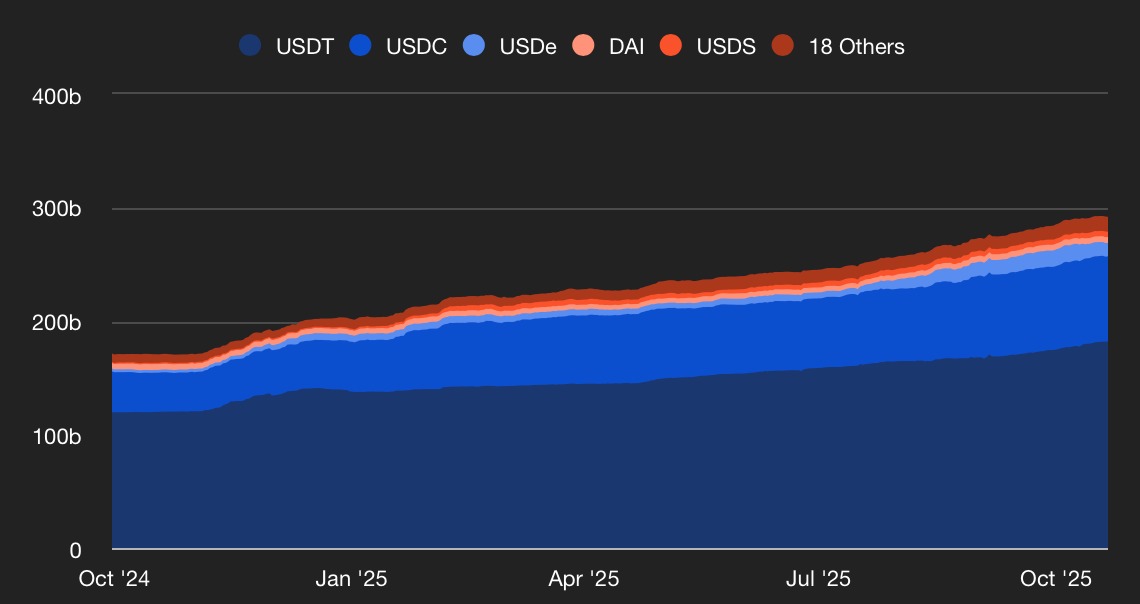
Of course, Tether is trying to respond by developing stablecoins that comply with regulations, such as USAT, which is specifically tailored to the US market, or by partnering with regulated companies in the European Union, such as the Maltese company StablR or the Dutch firm Quantoz.
However, the regulatory appeal (submission?) that this kind of approach implies does not seem to be a priority for its CEO, Paolo Ardoino.
500 million users worldwide
Analysts agree on the regulatory consequences imposed on the dominance of Tether’s USDT stablecoin. Nevertheless, they also believe that this situation has a limited geographical impact.
And Paolo Ardoino is not going to say otherwise, given the constantly growing number of users, now exceeding 500 million.
Tether’s USDT has officially reached 500 million users! Probably the greatest achievement in the history of financial inclusion.
Paolo Ardoino
At the heart of this growing adoption is an unprecedented increase in the use of USDT in emerging countries seeking stable monetary tools that are independent of their governments’ decisions and policies. This is an opportunity for Tether to promote its positive impact in Kenya in a documentary published on the X network.
The adoption of cryptocurrencies is not limited to the world’s major powers, which are attempting to control their development, almost exclusively in relation to trading operations. There is a real monetary vocation in emerging countries, at the heart of which stablecoins such as USDT could play a central role, far from the regulatory requirements of the European Union or the United States.