The Ark protocol is making its debut on the mainnet with Arkade. This new layer 2 allows complex financial applications to be created on Bitcoin, while remaining true to its principles. No bridges, no wrapped tokens, no risk of altering the core protocol. Bitcoin is becoming programmable.
Arkade: finally a real scalability solution for Bitcoin
One of the main reasons why altcoins such as Ethereum and Solana exist is because the Bitcoin blockchain lacks programmability. Indeed, if Bitcoin has been able to preserve its resilience and decentralization, it is primarily thanks to the simplicity of its operation: enabling peer-to-peer transactions in BTC.
Although many scalability solutions have been devised over time, none have really convinced, often due to compromises on decentralization. The Lightning Network, which also focuses on peer-to-peer payments, has helped a lot and has established itself thanks to its low impact on on-chain congestion.
For several years, developers have been working to design solutions where calculations are performed off-chain, in order to preserve the integrity of the main chain and avoid overloading the blocks.
Today, Arkade, the first implementation of the Ark protocol, is being launched.
This launch marks an important milestone in the Bitcoin ecosystem and could well have an impact on the entire crypto industry. Arkade introduces a second layer (L2) infrastructure designed to make Bitcoin programmable without compromising its security.
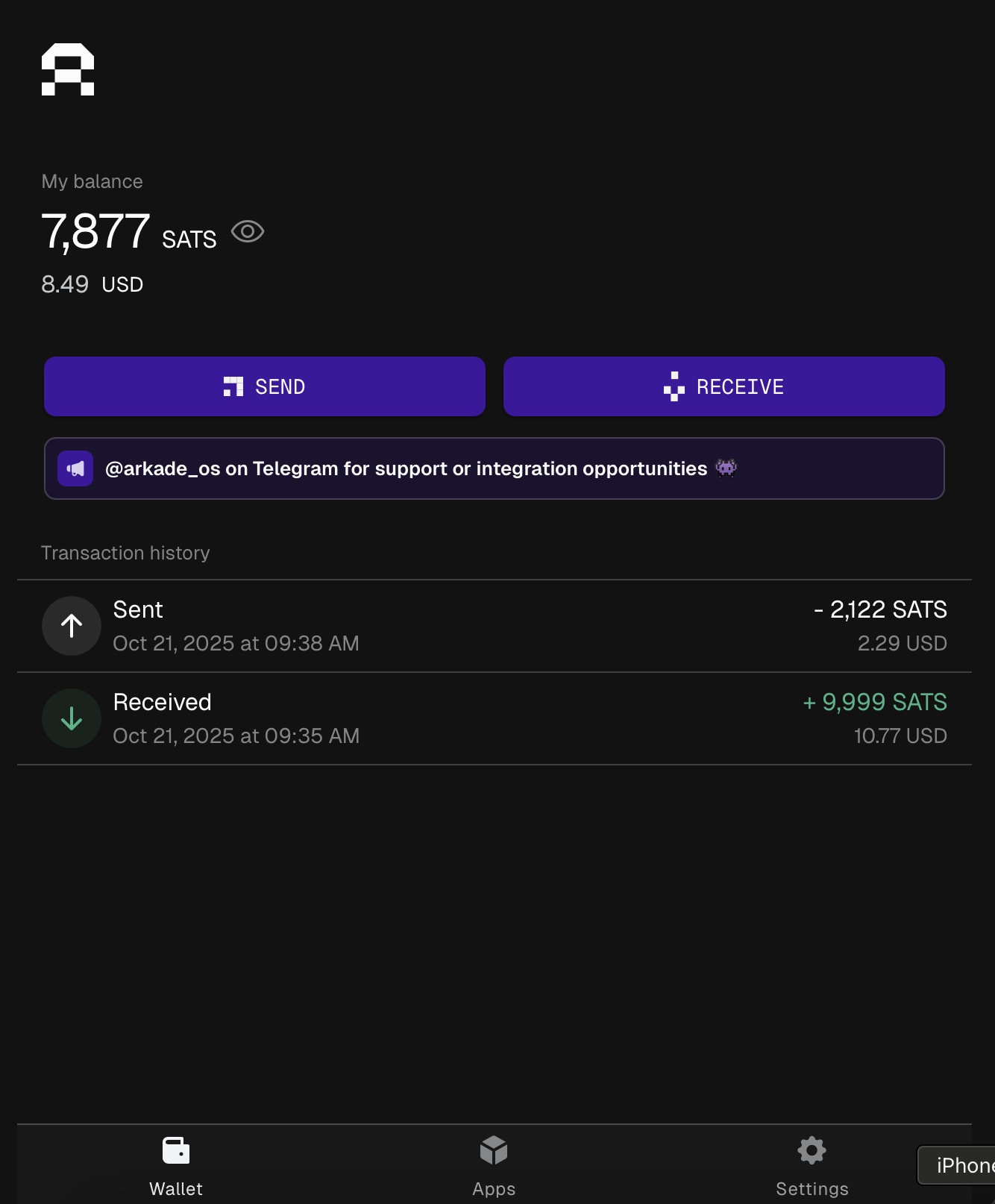
Unlike other solutions currently in development, Arkade does not require any changes to the Bitcoin protocol. In recent months, there has been growing debate around covenants and opcodes that could enable Bitcoin to evolve.
But with Arkade, not only are these changes unnecessary for its operation, but the execution platform also provides an environment where new opcodes can be created, tested, and even commercialized, before eventually convincing the community to integrate them into the Bitcoin protocol via a soft fork.
What new features does Arkade offer?
Arkade is based on an approach of “virtualizing” UTXOs, or Bitcoin coins. This method allows complex transactions to be executed off the main chain, while maintaining the security guarantees of the blockchain. Users retain the option to exit the protocol at any time via a “unilateral exit,” i.e., to recover their BTC on-chain, without the need for authorization or intervention from a third party.
This architecture paves the way for a new generation of decentralized financial applications on Bitcoin: lending platforms, trading, stablecoin issuance, and much more, all without wrapped tokens as is the case on Ethereum or Solana.
Upon launch, the protocol will integrate Boltz Exchange (for swaps between different networks) and Lendasat, a peer-to-peer lending platform that allows users to deposit BTC as collateral to borrow stablecoins, without an intermediary.
With Arkade Assets, Arkade introduces a native framework for managing fungible assets, including stablecoins.
The goal is simple: to bring tokenized activity back to Bitcoin, particularly assets such as USDT, by providing them with the infrastructure they have always lacked on the main layer.
Like any serious second-layer solution on Bitcoin, Arkade integrates the Lightning Network (via Boltz), enabling seamless transactions to other networks such as Liquid, Rootstock, Spark, or Starknet. Often criticized, the Lightning Network has nevertheless established itself as an interoperability standard, now serving as a common language for protocols built on Bitcoin.