
The high volatility of the cryptocurrency sector allows for significant profits to be made, sometimes without even realizing it. Bitcoin miners may have a strategic advantage in AI — Here’s what this analysis says
According to Bernstein, Bitcoin (BTC) miners have a competitive advantage when it comes to deploying computing power for artificial intelligence (AI). Why is that?
Do Bitcoin miners have a role to play in AI?
Last Friday, the research and brokerage firm published a note stating that Bitcoin (BTC) miners have a competitive advantage over the artificial intelligence (AI) sector in the United States.
The rise of AI has been accompanied by growing demand for data centers. However, access to the power grid is becoming increasingly difficult for data centers looking to set up shop, where miners, already under contract with energy suppliers, already control more than 14 gigawatts of capacity.
This allows them to diversify their activities by upgrading their facilities, which would reduce deployment times by up to 75% compared to competing projects. And for good reason: in some regions, delays can be as long as seven years.
In the past, we have already looked at the porosity that could exist between the mining and AI industries. Last year, Northern Data Group, a company in which Tether is the main shareholder, turned away from Bitcoin mining to focus on AI. More recently, Google acquired a 14% stake in TeraWulf through agreements on high-performance computing (HPC) projects.
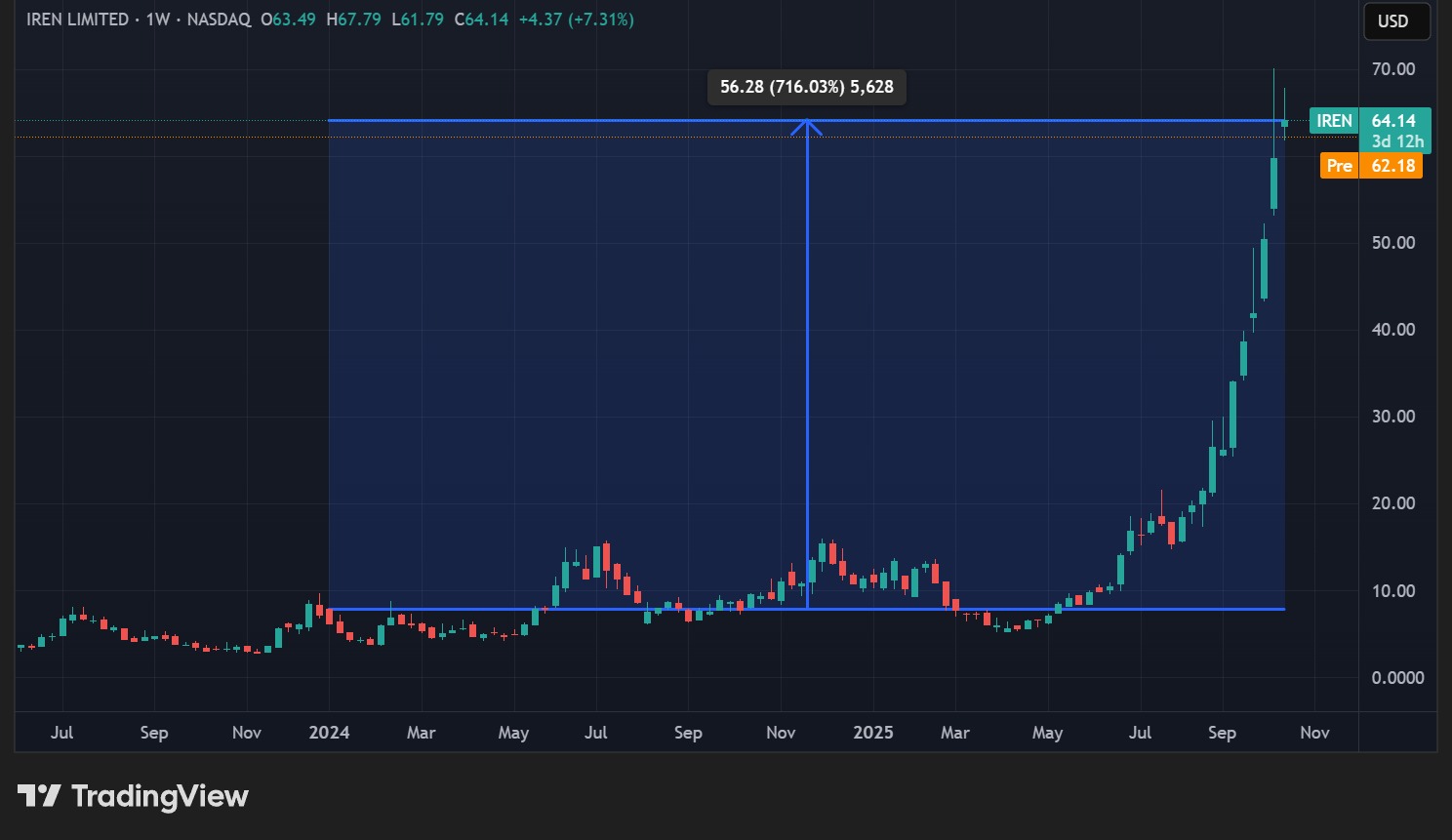
For its part, Bernstein cited the example of IREN, the most capitalized Bitcoin miner, whose stock has already risen more than 700% since the beginning of the year. As a result, the firm’s analysts have set a target share price of $75:
In parallel with the growing needs of the AI industry, Bitcoin is designed in such a way that mining requires increasing investment from the players involved in order for them to remain competitive.
As halvings occur, the break-even point is revised upwards, which can put miners at a disadvantage during prolonged periods of decline. Therefore, a migration to AI may be a relevant economic choice. Over the years, it will be interesting to observe the movements between these two industries and how a balance will be found, as a shift from one to the other automatically reduces competition on one side and increases it on the other.
At the same time, the price of BTC is $112,100 at the time of writing, down 2.86% over the last 24 hours.
This is the case with the $200,000 donation in BNB made by Binance and its users in 2018. This sum remains unclaimed and is now worth $39 million.
A $200,000 donation that is now worth $39 million
The significant rise in the price of certain cryptocurrencies sometimes leads to unlikely situations. Most of these stories are associated with Bitcoin, involving lost wallets or addresses that have been reactivated after more than a decade of dormancy, but some altcoins also fall into this category.
This time, the situation concerns BNB, the official utility token of the BNB Chain, which is also associated with the Binance cryptocurrency exchange platform. And with good reason, as its price has risen significantly in recent months, reaching historic highs since it passed the symbolic $1,000 mark.
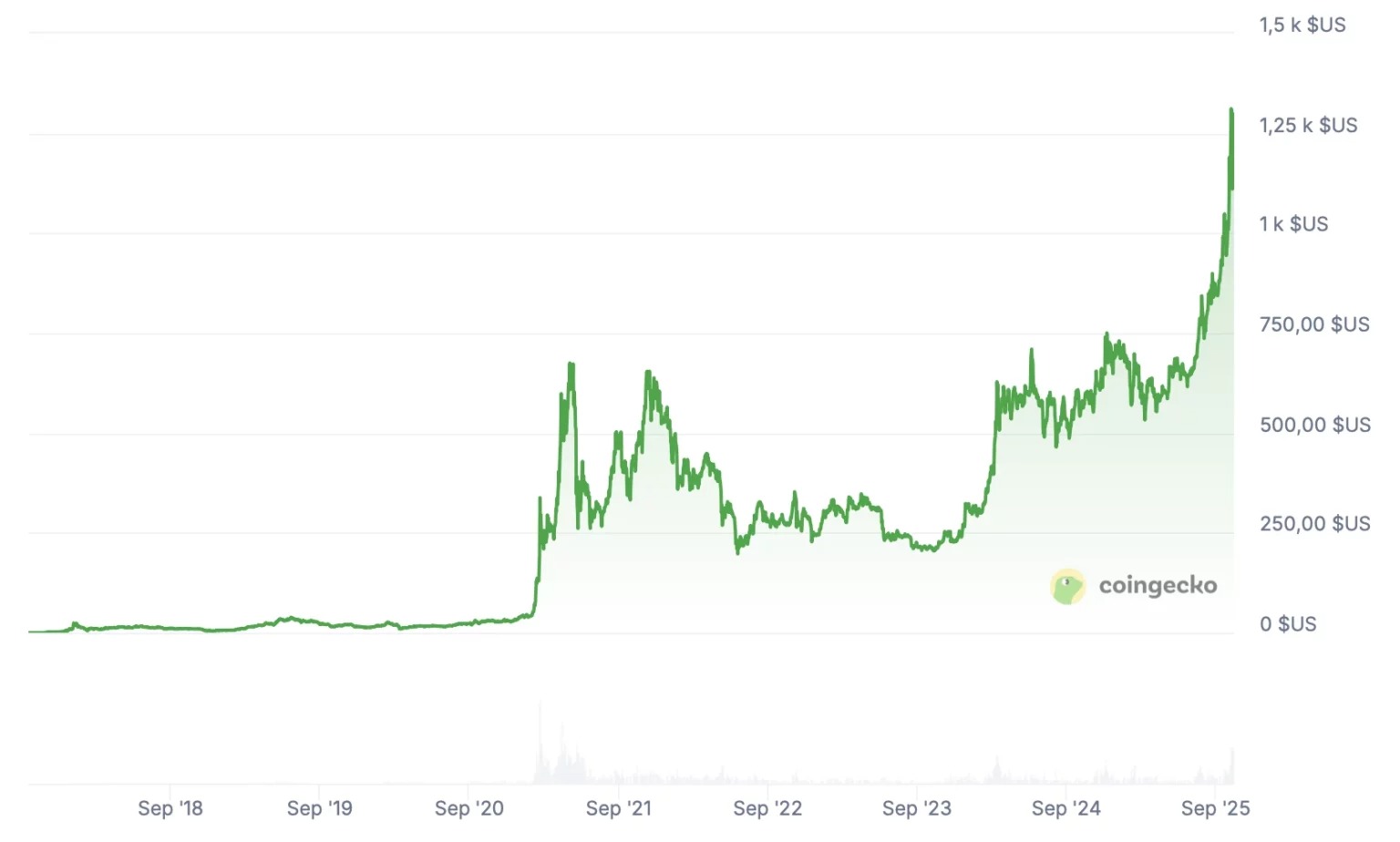
However, the time frame currently involved is more accurately measured in years, since the case in question concerns a donation made by Binance and its users in 2018. At that time, the price of BNB was around $10, more than 100 times below its current price.
At the time, this charitable operation involved a donation of 30,660 BNB to support terminally ill cancer patients in Malta. At the time, this represented the not inconsiderable sum of $200,000. However, no one ever came to claim these funds, which are now estimated to be worth $39 million!
“Inform your government that these funds are available”
This situation was recently brought to light on the X network by Conor Grogan, head of commercial operations at the Coinbase platform. The most recent notable activity was a publication by Binance Charity dated 2021, stating that “this dedicated fund will always belong to the citizens of Malta.”
And for good reason: legal proceedings had been brought against it at the time by the Office of the Commissioner for Voluntary Organizations, following its inability to locate the accounts involved. The matter was quickly resolved by Binance Charity, which was quick to point out that the funds were intended directly for cancer patients.
This was an opportunity for Conor Grogan to share a screenshot of the portfolio in question, which currently stands at $38.9 million. He openly called on the citizens of Malta to “inform [their] government that these funds are accessible.”
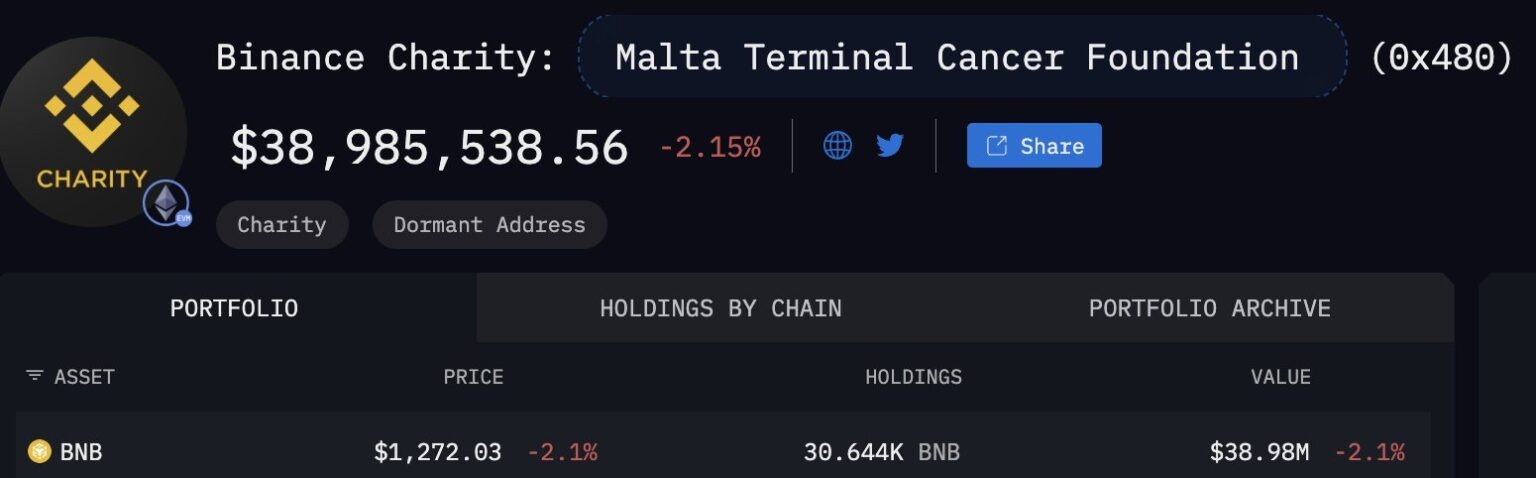
According to Conor Grogan, the current amount of this donation “could cover the entire salaries of the medical specialists needed” to help terminally ill cancer patients. Let’s hope that the patients affected by this charitable operation will finally be able to benefit from it.