
In recent weeks, tokenized Pokémon cards have been particularly popular, with volumes rising sharply. Is this a real paradigm shift among collectors, or just a passing fad?
Tokenized Pokémon cards are on the rise
In recent weeks, a new trend seems to be emerging in the world of Real-World Assets (RWA): tokenized Pokémon cards.
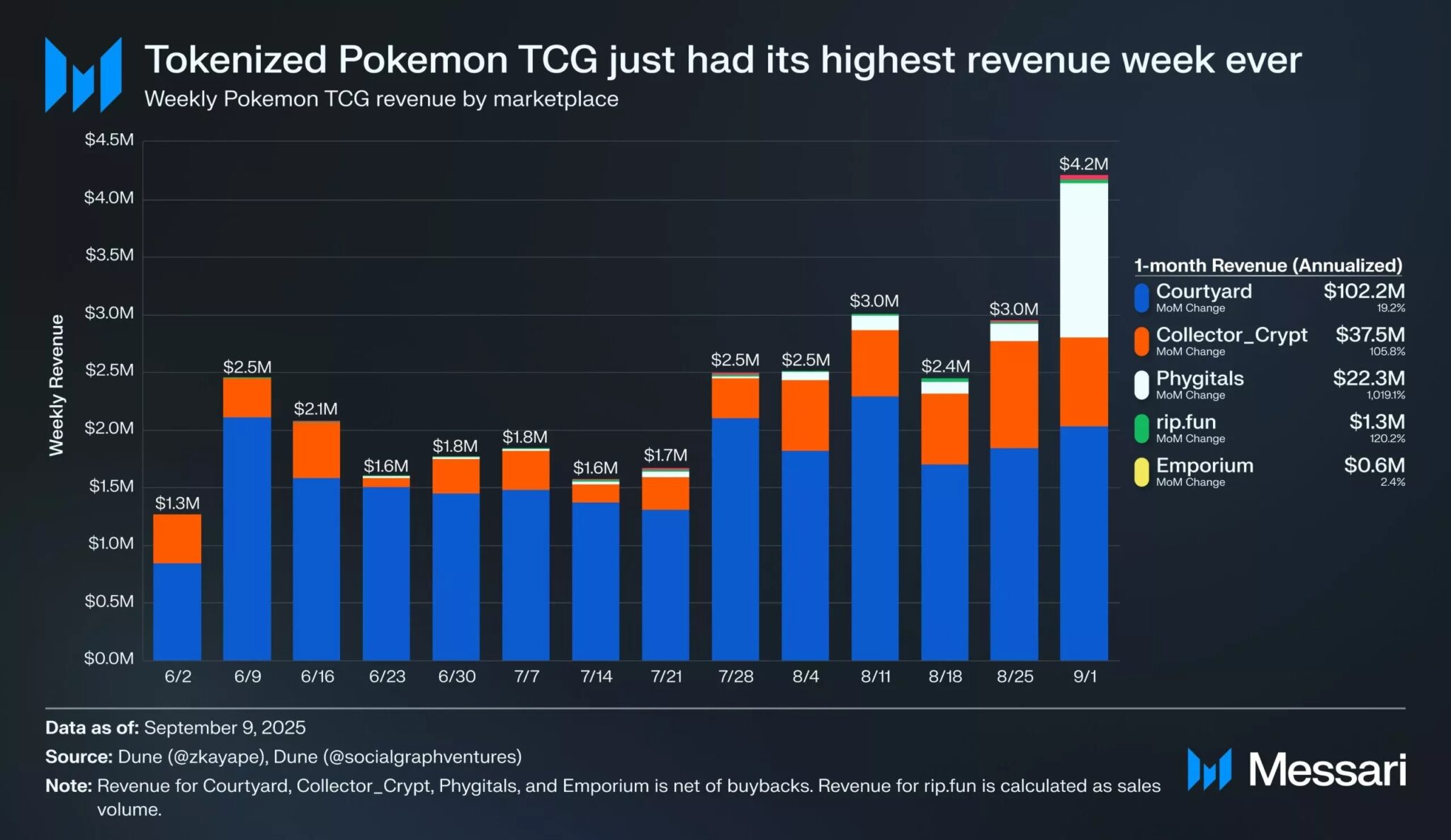
While this practice is not new, the figures are indeed on the rise, as shown in this infographic from Messari, illustrating the weekly revenues of the main trading platforms between early June and early September:
In terms of weekly volumes, we can also see an initial increase at the beginning of the year, but above all an explosion at the end of July. Last week, a peak was reached at $45.46 million:
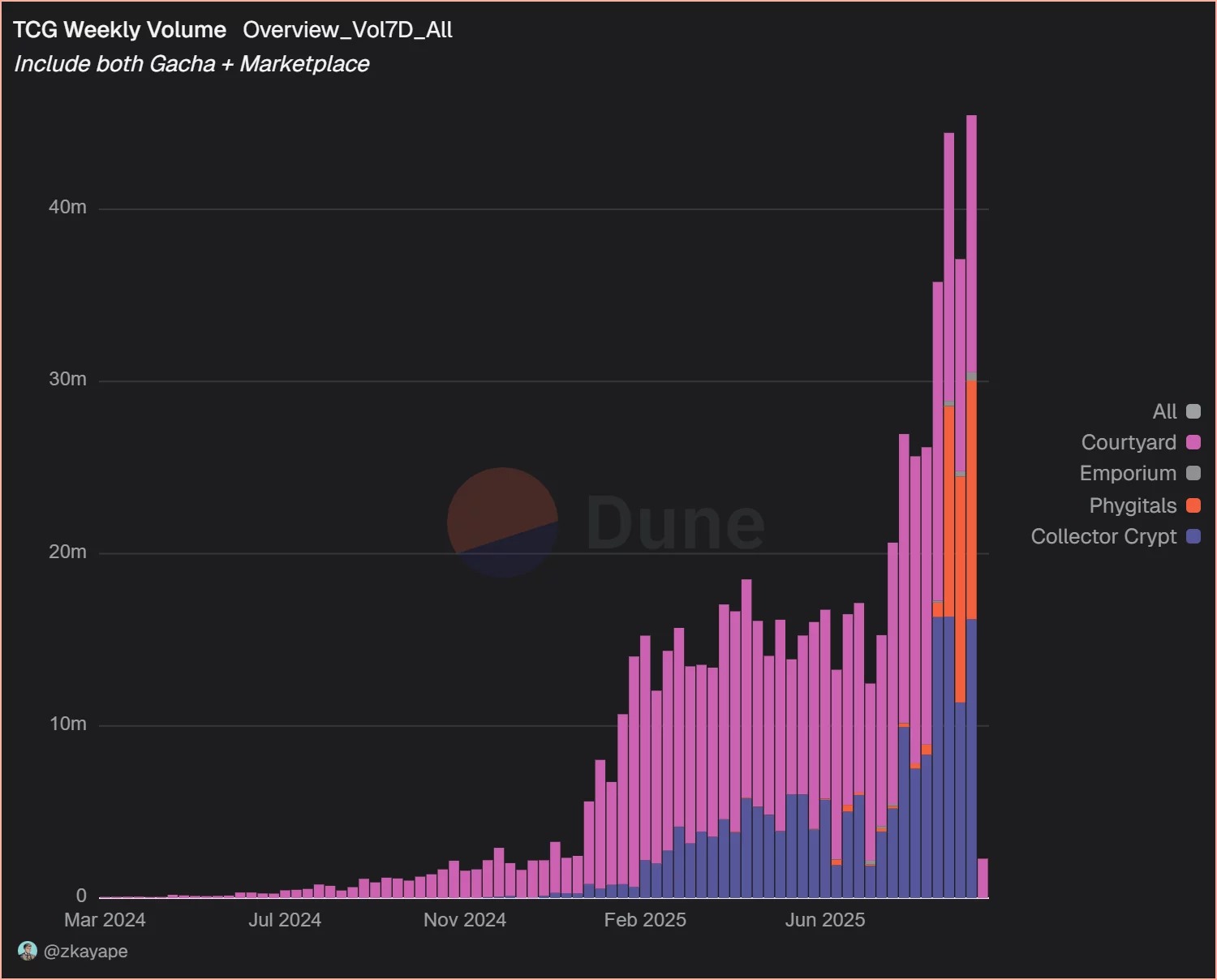
While there are several specialized platforms, three are leading the way: Collector Crypt, Phygitals, and Courtyard. The first two operate on Solana (SOL), while the third is based on Polygon (POL).
What are tokenized Pokémon cards?
In the world of card collecting, there is a practice that allows a card to be given a more or less official rating: grading. A specialized company will analyze the condition of the card in minute detail, then protect it in a clear plastic case and assign it a grade. From then on, the price of a card is determined by its rarity, supply and demand, and its grading score.
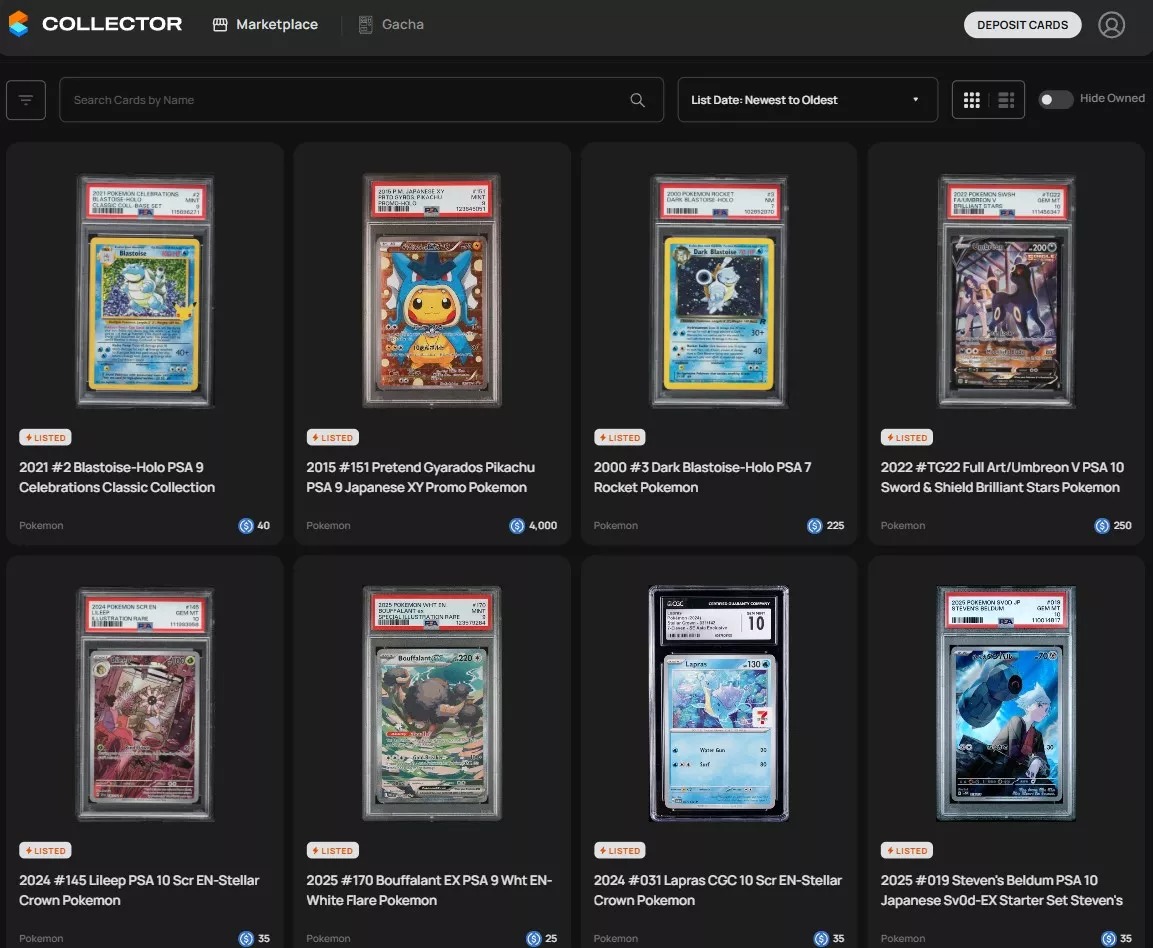
This is where tokenization comes in. Specialized companies connect collectors from around the world to sell and buy digital versions of real cards in the form of non-fungible tokens (NFTs). This allows collectors to trade or sell their ownership rights, in theory much more easily than through traditional methods, or destroy the NFT to claim the associated card:
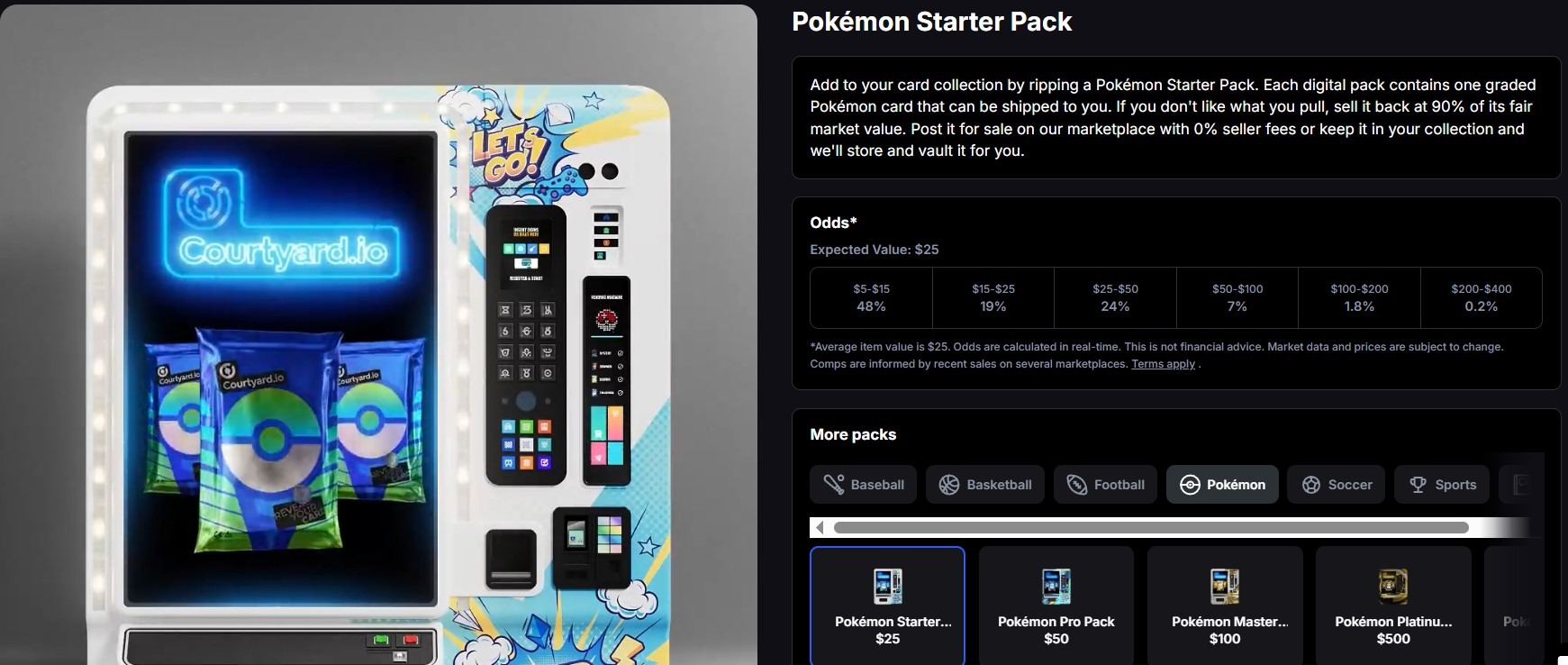
To replicate the experience of opening a booster pack (a sealed pack of cards), these platforms also offer a mechanism known as “Gacha,” which is a kind of vending machine that allows you to purchase a random card at a fixed price.
On Courtyard, for example, the price of a random card starts at $25, and the platform promises to buy back any card you don’t like at 90% of its market price. With this particular offer, there is a 48% chance of getting a card with a market value between $5 and $15, compared to a 0.2% chance of getting a card worth between $200 and $400:
A passing fad that doesn’t interest serious collectors?
Although the concept is promising and certainly innovative, questions remain about the sustainability of the model. And with good reason: an experienced collector, who owns “several thousand trading cards,” told Cryptoast that he had not seen a single true collector mention such platforms in the discussion groups and forums he frequents.
Within the community, the benchmark platform is Cardmarket, which connects collectors for the purchase and sale of cards. While he acknowledges that the principle of tokenization has advantages, he counters by explaining that, in terms of security, there are already “plenty of sites that offer to store your rare cards for you.”
In addition, prices on such marketplaces are often higher than in reality, which fuels speculation and leads to paying “a premium.”
Added to this is the fact that it is an illiquid market and that just because a card is highly valued does not mean it is easy to sell.
Furthermore, there are two other risks to consider with tokenized cards compared to traditional collecting. The first is counterparty risk, and as such, it is important to check with each platform in detail to find out how to claim an NFT, whose underlying card is stored with a third party, in the event of the platform’s closure. Furthermore, there is still some legal uncertainty. Last July, the Securities and Exchange Commission (SEC) stated that “tokenized securities remain securities.” While at first glance a Pokémon card may not seem to fit the definition of a security, it is still a possibility to consider.