
The growing adoption of Bitcoin means a steady increase in its users, but also the conquest of new territories. This rapid global expansion involves one in six countries worldwide.
More and more countries are exposing themselves to Bitcoin
Since its official launch in 2009, Bitcoin has gone through many cycles. These stages are often associated with new historic highs for the price of BTC, but they also reflect its increasing adoption over time.
This situation has been examined by the Bitcoin Policy Institute, a non-profit organization that studies the political and societal implications of the queen of cryptocurrencies, in a comprehensive report entitled: Adoption by Nation States: How and Why Are Countries Exposing Themselves to Bitcoin?
According to the data collected, this survey “highlights the rapid acceleration of this trend over the past year.” However, the origins of this movement can be traced back to the previous BTC bull cycle, with countries such as El Salvador and the Central African Republic.
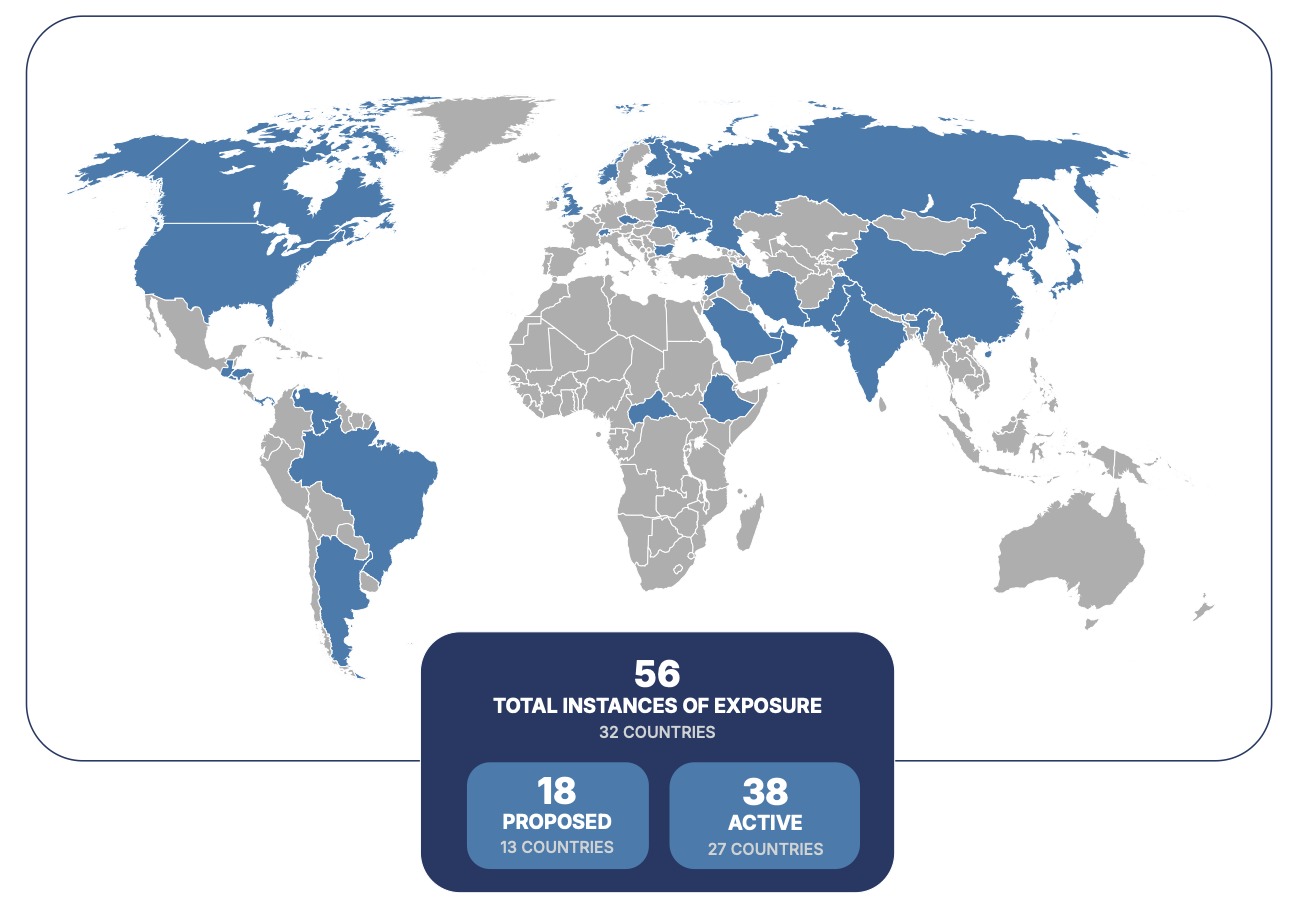
Then the United States arrived with its strategic Bitcoin reserve project, and everything changed definitively. This notable acceleration now involves some 30 countries—about 1 in 6 worldwide—with either active exposure (27) or legislative and/or policy projects underway (13).
What are the preferred exposure models?
In practice, the exposure to Bitcoin highlighted in this report involves various operations that may be separate or combined. The most popular remains, of course, the principle of national strategic reserves, which currently concerns 16 countries, with four projects active (United States, El Salvador, Switzerland, Saudi Arabia) and 12 in progress.
Then there are exposures considered less visible, primarily mining activity associated with the Bitcoin blockchain, which currently involves 11 countries actively, such as Bhutan and El Salvador, but also Russia, Argentina, Ethiopia, and Iran.
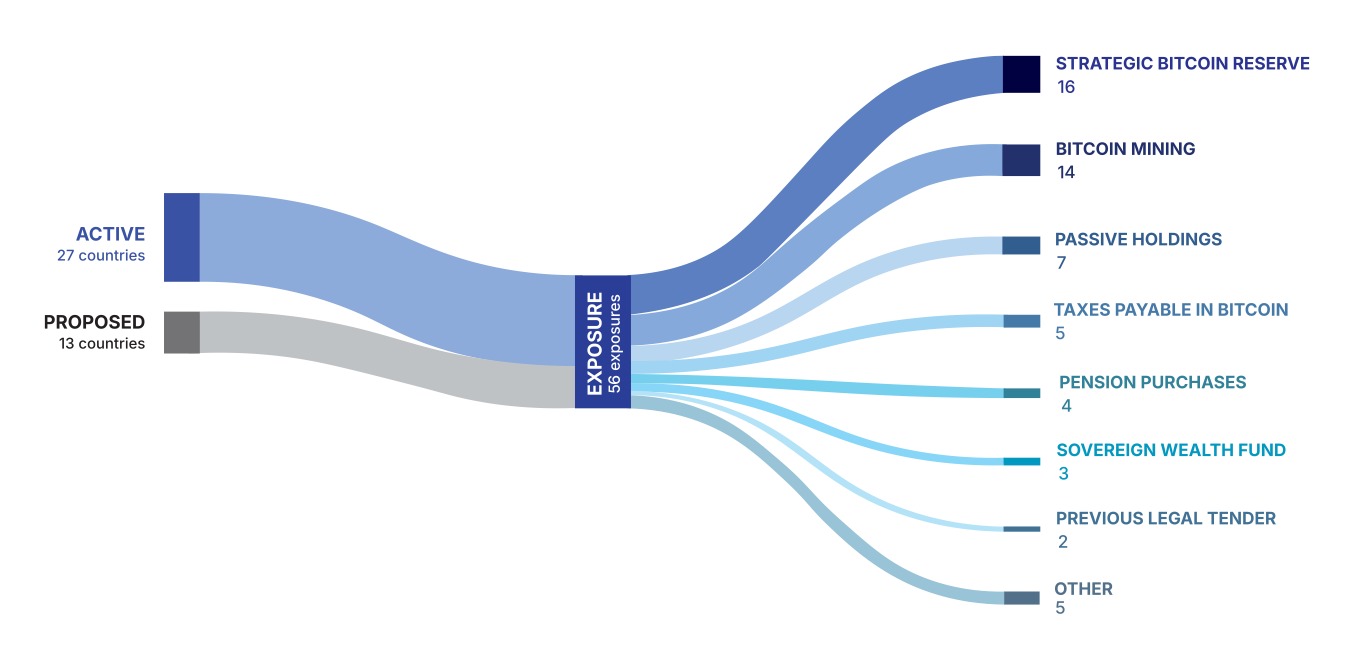
Next comes passive holding of BTC, mostly seized in legal proceedings, which sometimes falls under voluntary or “inactive” strategic reserves, with seven countries identified.
Finally, other Bitcoin-related activities fall under this principle of exposure, such as the possibility of paying tax bills in BTC in countries and regions such as Panama, Dubai, Colorado, Detroit, and certain Swiss cantons.
The last important point mentioned is the establishment of pensions and sovereign wealth funds, which concerns countries such as South Korea, Norway, Bhutan, and the United Arab Emirates.
According to the Bitcoin Policy Institute, the main reasons for this current exposure to Bitcoin are diversification and a desire to protect against the depreciation of the dollar. In the space of just one year, Bitcoin has gone from being considered marginal to a real “structural trend,” and those who are late to the party could quickly find themselves penalized.