
According to a recent study by Aviva, more than a quarter of Britons are considering incorporating cryptocurrencies into their retirement strategy. This figure reveals the growing interest in these digital assets, despite their volatility.
A quarter of Britons are turning to cryptocurrencies for their retirement
Bitcoin is a digital currency designed primarily to enable peer-to-peer value exchange, i.e., without an intermediary. From its inception, Satoshi Nakamoto, its mysterious inventor, gave it unique characteristics: a limited supply of 21 million units and a functioning based on actual energy expenditure. These elements give BTC the status of a store of value, encouraging some enthusiasts to use it as a savings instrument.
Even some governments recognize Bitcoin’s role. The United States, El Salvador, and Bhutan have accumulated significant amounts of BTC in recent years, which now constitute genuine strategic reserves.
These qualities are attracting a growing number of people around the world. Although the monetary properties of Bitcoin are still largely misunderstood, its status as a store of value is attracting interest, to the point that some are considering incorporating it into their retirement strategy. According to a study by Aviva, one of the UK’s largest insurance companies, more than a quarter of Britons are considering adding cryptocurrencies to their retirement planning.
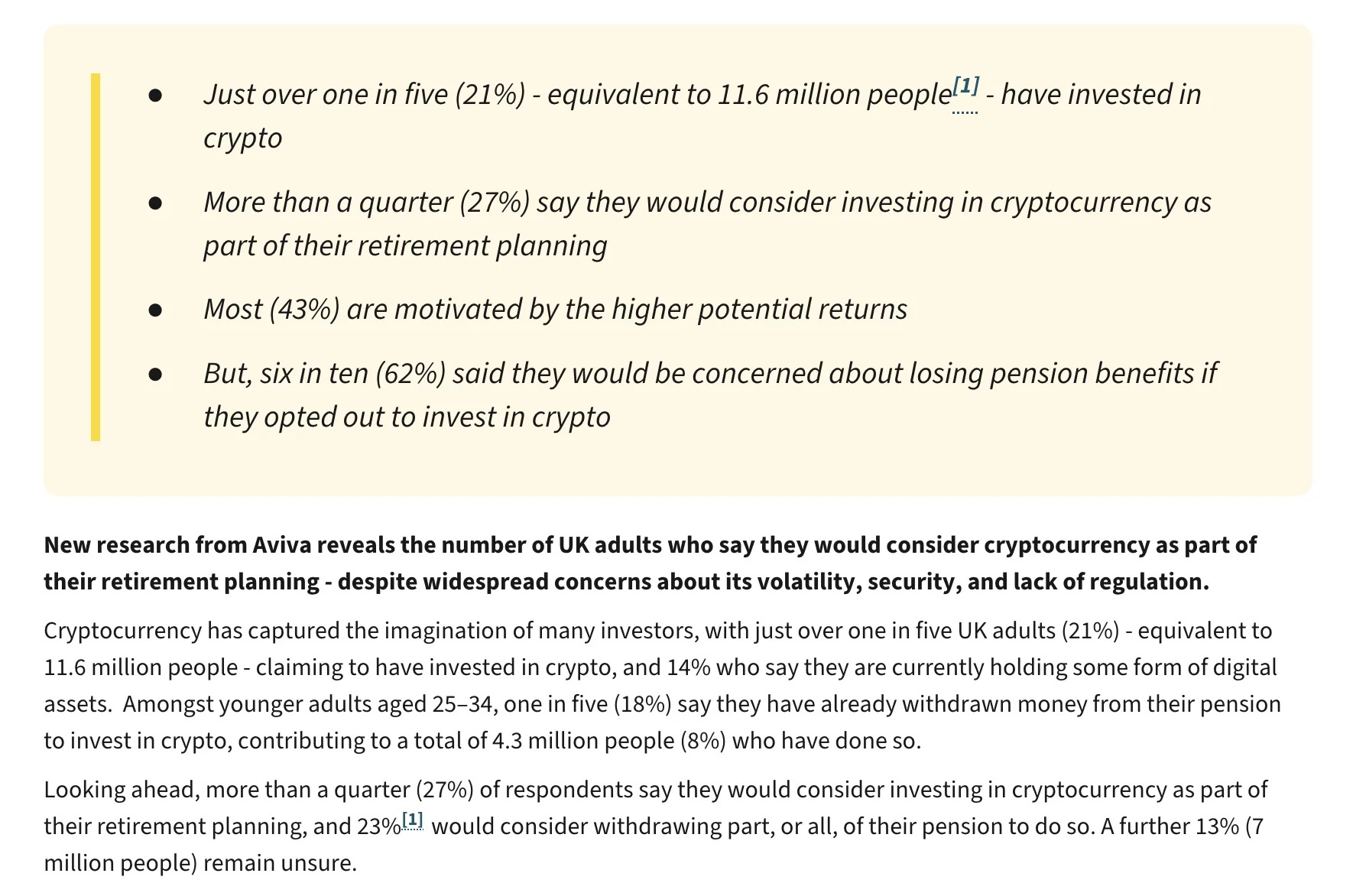
The study highlights several important figures:
- 21% of British adults, or around 12 million people, have already invested in cryptocurrencies;
- 27% would consider incorporating crypto into their retirement planning;
- 8% (4.3 million people) have already withdrawn money from their pensions to invest in crypto, a figure that rises to 18% among 25-34 year olds.
Among those willing to bet on cryptocurrencies:
- 43% are looking for higher returns.
- 36% are attracted by technological innovation.
- 32% want to diversify their portfolio.
This study directly echoes a decree signed by Donald Trump in early August opening up US 401(k) retirement savings plans to cryptocurrencies, as well as other alternative assets such as unlisted real estate and private equity.
This reform, intended to broaden the options available to savers, particularly younger ones, who are often more open to the world of crypto, could direct a significant portion of the $8.7 trillion in these funds toward the cryptocurrency market.
Bitcoin and cryptocurrencies for your retirement: Is it a good idea?
The Aviva survey does not specify which cryptocurrencies are covered by the study. While it is easy to understand the appeal of including Bitcoin in a savings plan, given its market capitalization, longevity, and decentralization, this seems less obvious for assets such as Ether or other cryptocurrencies, which are more volatile and centralized.
Investing part of your retirement savings in cryptocurrencies can therefore be risky if you do not take into account the fundamentals of each asset. Their high volatility can cause holders to act emotionally, buying or selling at the worst possible time.
Regulated products, such as ETFs or 401(k) plans in the United States, help limit these risks for novice investors. However, by relying on third-party custodians, they also deprive savers of the fundamental benefits of Bitcoin, particularly its resistance to censorship.