
The institutional adoption of the cryptocurrency sector seems to be benefiting certain iconic players in the ecosystem, such as the Ethereum blockchain. Could it be becoming the number one choice for global financial institutions?
Ethereum: the blockchain of choice for institutions?
For some time now, the Ethereum blockchain seems to be regaining popularity, to the point that it recently recorded a significant increase in activity, reaching a new all-time high at the beginning of this week, largely supported by historically low fees… and a possible increase in adoption by institutions.
This is a real renaissance, especially considering its lack of appeal since 2021, when these same fees represented exorbitant amounts—sometimes exceeding $100—for trivial operations such as a simple swap, while its blockchain suffered from permanent congestion.
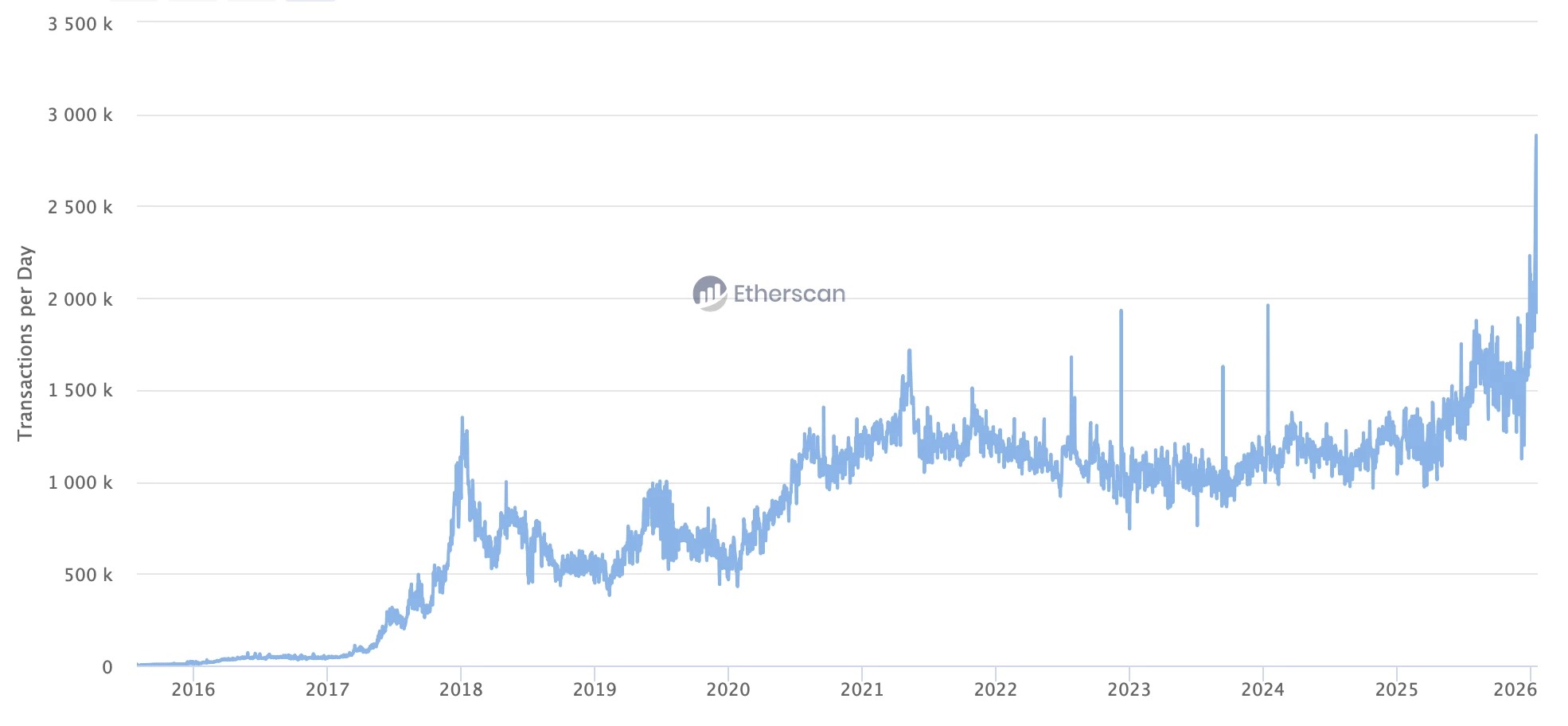
Could this be a thing of the past? In any case, its recent Fusaka upgrade, combined with a massive influx of traditional finance players into the crypto sector, seems to correspond to a renewed interest in its adoption, against a backdrop of real-world asset (RWA) tokenization and unprecedented growth in the stablecoin market.
This observation was made by the Ethereum X account to its 4 million followers, allowing it to claim that its blockchain is now “the number one choice for global financial institutions.” This “accelerated adoption” is demonstrated more specifically in the list of “35 examples of institutions developing solutions on Ethereum.”
A development that affects many innovative sectors
High on this list are tokenized stocks, whose market—estimated at $1.3 billion for all stocks combined (listed or unlisted)—represents a significant growth opportunity in the coming years.
It is a sector in which the Kraken platform recently launched its xStocks, available in the form of ERC-20 tokens, while the Ondo Finance protocol rolled out its Global Markets project on Ethereum, with more than 100 tokenized US stocks and ETFs. At the same time, Securitize announced its intention to launch tokenized “real stocks” issued in full compliance on its blockchain.
But Ethereum is also making its mark in the stablecoin sector, particularly as its blockchain currently hosts more than 56% of the available supply. This is an area in which the giant Google recently announced the development of a payment protocol for AI agents (A2P), while many companies are considering launching digital currencies of this type on Ethereum or its layer 2.
At the same time, many tokenized money market funds are emerging on its blockchain, such as JPMorgan and its MONY project, or Europe’s largest asset manager, Amundi, which announced in November its intention to tokenize one of its euro funds on Ethereum.
It is difficult to name all the sectors and projects involved, to which it also seems possible to add ETFs that are now open to staking. One thing seems clear: the Ethereum blockchain appears to be appealing to institutional investors.