BIP-110, proposed by the Bitcoin Knots implementation, suggests a one-year soft fork to restrict the excessive storage of non-financial data on Bitcoin. This change, driven by the rise of on-chain spam, reignites tensions between advocates of a neutral Bitcoin and defenders of a strict monetary protocol.
A temporary “soft fork” to curb data storage
Following the frenzy surrounding Ordinals, tokens, and NFTs on Bitcoin in 2023 and 2024—which caused a sharp increase in transaction fees—the community split into two camps.
On one side is Bitcoin Core, which believes that these uses, though debatable, cannot be banned without compromising the protocol’s neutrality. On the other, Bitcoin Knots, led by Luke Dashjr, which advocates for their censorship to preserve the blockchain’s strictly monetary use.
While an initial fork proposal from the Knots camp failed to garner sufficient support, they are back with a new proposal: BIP-110.
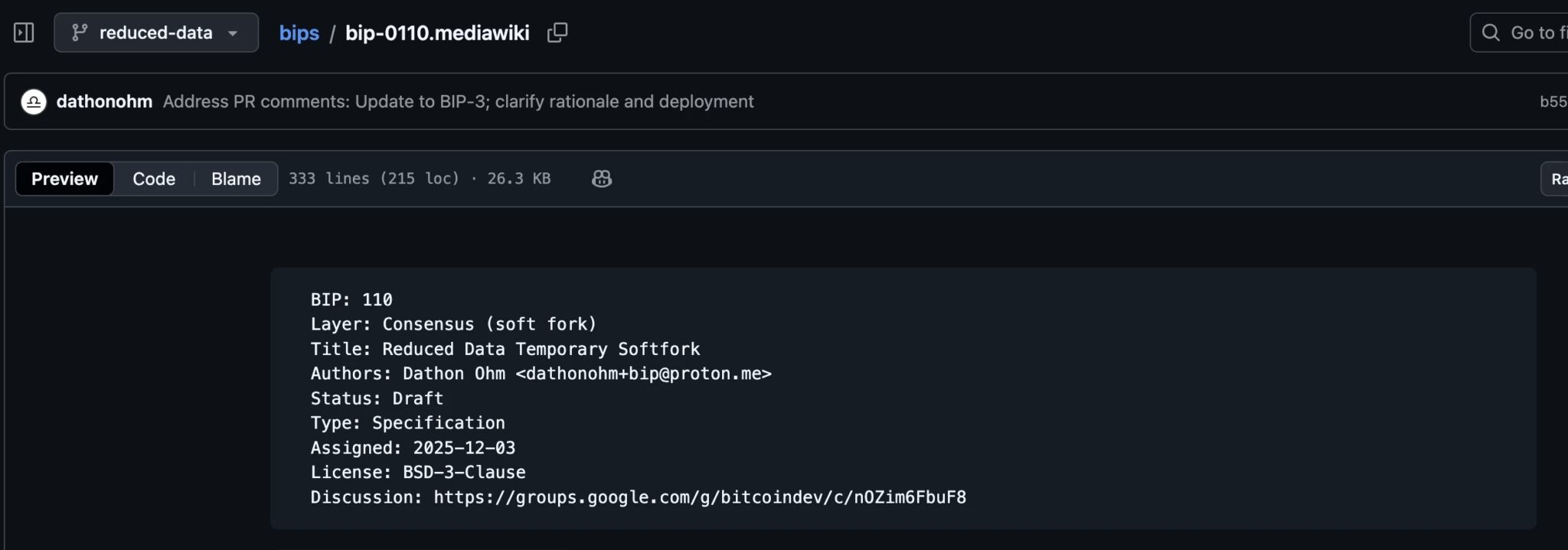
BIP-110
BIP-110, also known as the “Reduced Data Temporary Soft Fork,” is a Bitcoin protocol improvement proposal aimed at temporarily limiting the size of non-monetary data included in transactions. It introduces a one-year soft fork designed to refocus Bitcoin on its primary function as a decentralized, peer-to-peer currency.
In practical terms, BIP-110 adds stricter validation rules for a period of one year. For example, it reintroduces a limit of 34 bytes on transaction output script sizes (except for OP_RETURN, which is limited to 83 bytes), data added to transactions via the PUSHDATA opcode or in Taproot signatures is capped at 256 bytes, and certain versions of non-standard scripts become invalid.
The goal of this new BIP is therefore to reduce the publication of transactions deemed by some to be “spam,” often linked to non-fungible tokens (NFTs) or memecoins.
However, while the motivations behind this BIP are laudable, its adoption would essentially constitute a step backward from limits previously lifted by Bitcoin Core. Bitcoin Knots currently offers no sustainable and truly effective solution to prevent the inscription of arbitrary data on-chain, assuming such a goal is even technically achievable.
A BIP That Risks a Bitcoin Blockchain Fork
Even among Bitcoin Core developers, many consider the inscription of non-monetary data to “pollute” the blockchain.
However, their approach is more pragmatic: they acknowledge that this data was already being recorded long before, often via methods even more harmful to the network, such as Stamps or non-standard transactions directly confirmed by miners, thereby bypassing node filters.
BIP-110 can be activated in two ways.
The first involves activation by miners (Miner Activated Soft Fork or MASF) before September 1, 2026, if 55% of the blocks over a period of 2,016 blocks signal their support.
The second option could occur if the first fails; it relies on a User Activated Soft Fork (UASF), similar to the 2017 blocksize war, where nodes themselves enforce the new rules by rejecting blocks that do not comply.
Currently, only 2.4% of the network’s nodes have activated BIP-110.
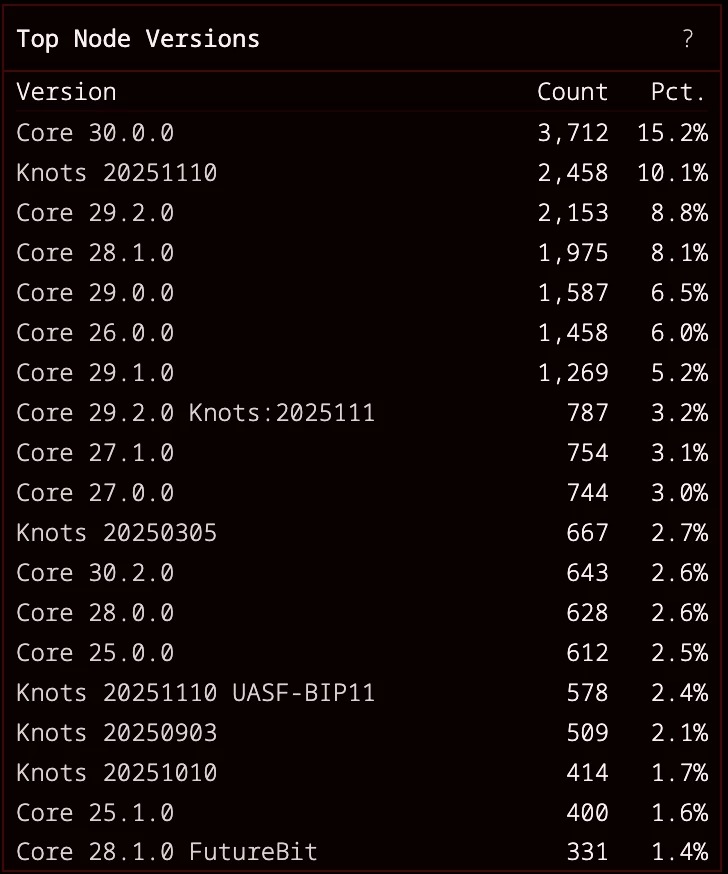
Breakdown of Bitcoin software used on the network
The main risk, if BIP-110 is activated via a UASF, lies in this threshold being reduced to 55%: it could lead to nodes becoming desynchronized if no miners support it, or even trigger a hard fork if miners do support it, thereby excluding the 45% minority from the main chain.