Is France preparing to jump on the digital innovation bandwagon by including the principle of tokenization in its agenda of future priorities? That’s what the AMF’s recent press release suggests regarding the establishment of a strategic group dedicated to innovation and the tokenization of finance.
The AMF, the Banque de France, and the Treasury Department are examining the issue of tokenization
If there is one innovation related to the cryptocurrency sector that has been making headlines for some time, it is the tokenization of real-world assets (RWAs) and its ability to redraw the boundaries of traditional finance—whether technical or simply structural.
In fact, this blockchain-based digitization principle applies to many of today’s economic sectors—from real estate and stocks to Treasury bills—to the point that its valuation has surged by more than 400% since early 2025.
To learn more—What is tokenization and which sectors is it transforming?
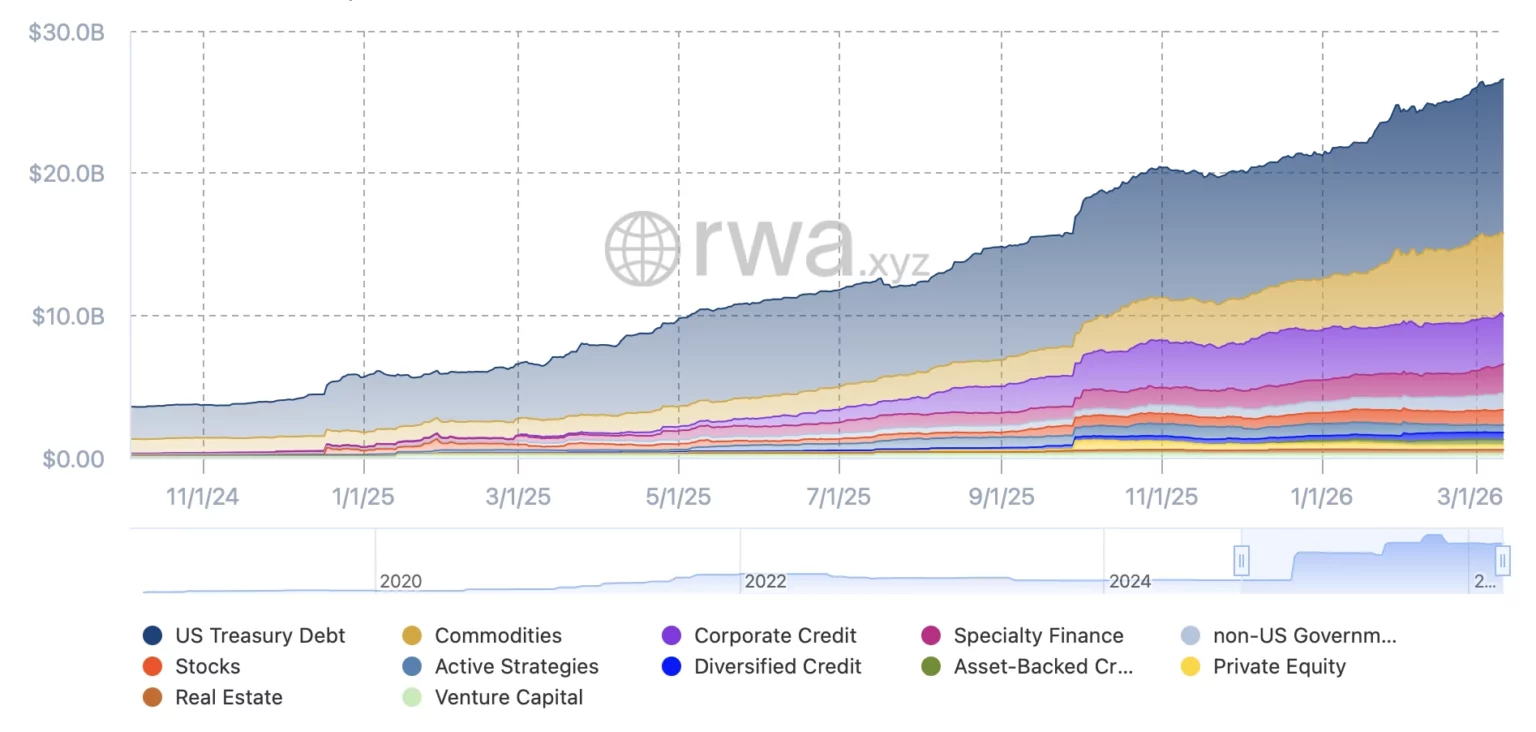
The tokenization sector is growing rapidly
This reality has already been widely acknowledged in the United States, where SEC Chairman Paul Atkins announced last December that the U.S. market is set to be tokenized within the next two years. This is enough to motivate other countries to address this pressing issue—such as France, through the Autorité des marchés financiers (AMF).
This national regulatory body has just issued an official statement regarding the establishment of a “strategic group dedicated to innovation and the tokenization of finance,” in partnership with the Banque de France and the Directorate General of the Treasury.
To promote the contribution of distributed ledger technology to improving the financing of the French and European economies, the strategic group—coordinated by the three authorities—aims to identify concrete projects and facilitate the adoption of this technology.
AMF
“Identify the risks posed by overly slow adoption of these technologies”
In practice, this strategic group aims to “facilitate the widespread and effective adoption of tokenization” within “the financial market ecosystem (issuers, investors, financial intermediaries, and infrastructure providers)” by identifying concrete use cases, such as:
- The implementation of tokenized assets for private settlement (tokenized deposits and stablecoins);
- The tokenization of the financial instruments market;
- Blockchain-based business models for financial markets;
- The development of tokenized funds.
Against a backdrop of accelerating international initiatives, the group will also aim to identify the risks that a slow adoption of these technologies could pose to the competitiveness of the European financial center, and even to the financial sovereignty of the Union.
AMF
This work also aims to support the implementation of an interbank central bank digital currency (CBDC)—known as a “wholesale” CBDC—in euros, scheduled for fall 2026, while contributing to the Franco-German working group on tokenized finance announced last January by the Ministers of Economy and Finance.