
After experiencing significant congestion this summer, the time required to withdraw from staking on Ethereum (ETH) has decreased considerably. Now, it takes just 6 days to retrieve your assets.
Withdrawal times for staking continue to drop on Ethereum (ETH)
Earlier this month, we reported on the decrease in withdrawal times for staking on Ethereum (ETH). At that time, wait times had fallen below 20 days, marking a three-month low. Since then, this queue has continued to shrink, to the point where it now stands at just over 6 days, with slightly less than 350,000 ETH awaiting withdrawal.
By comparison, at the beginning of the month, users still had to wait 26 days to recover their assets.
To gauge the extent of this shift in dynamics, a comparison can be made with the waiting time to enter staking. And for good reason: nearly 740,000 ETH are currently being deposited, representing a wait time of nearly 13 days:
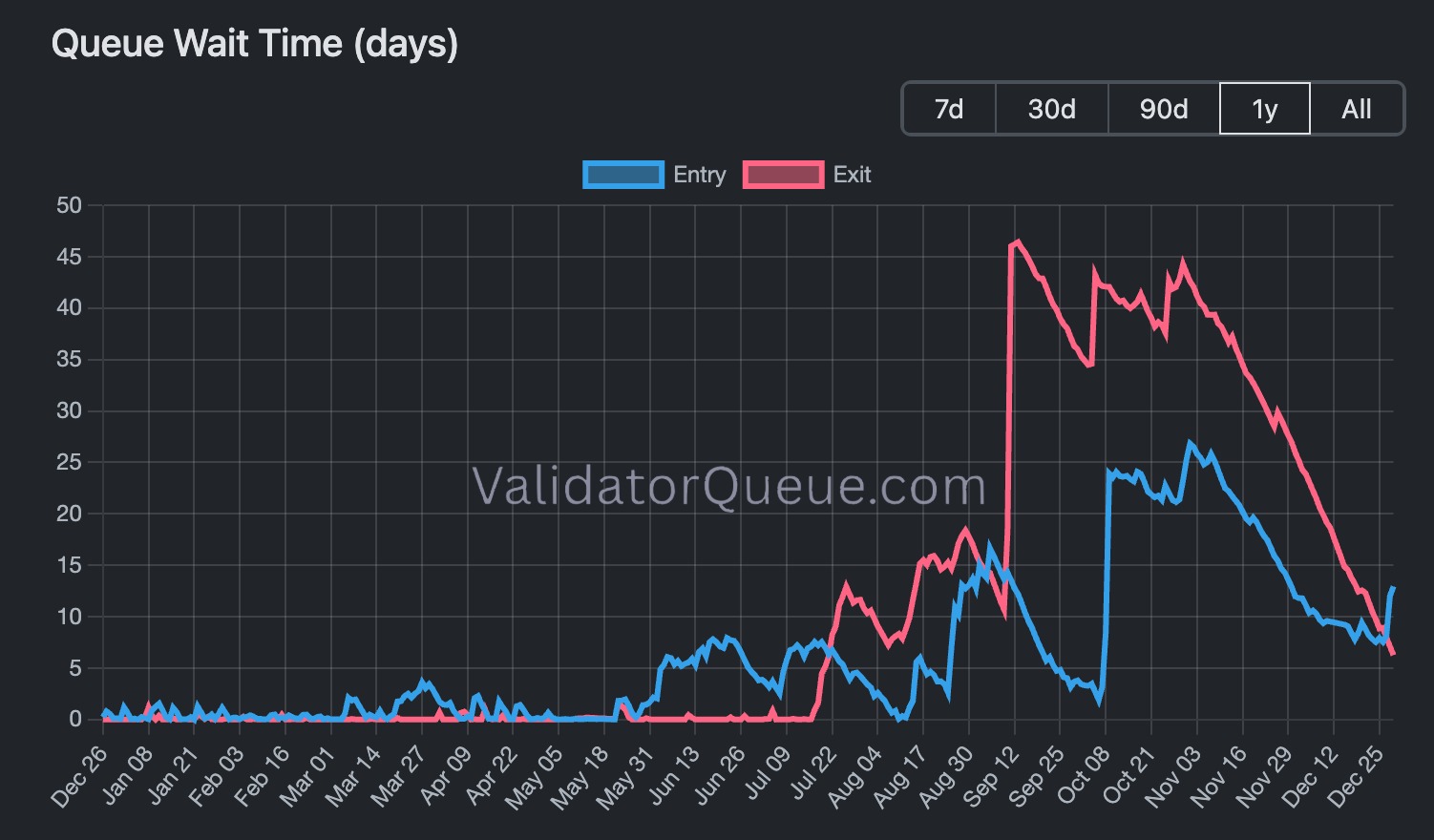
Ethereum staking entry and exit queues
As a result, the significant congestion that began this summer now appears to be easing, as the market maintains its wait-and-see stance. Regarding deposits, these could nevertheless remain on the current trajectory, while staking on U.S. ETFs is trending upward.
As for the number of validators, however, it is worth noting that the decline continues. To date, the Ethereum blockchain has 983,786 active validators, the lowest level since April 2024.
Despite the crisis of recent months, more than 35.6 million ETH continue to secure the network. While this represents nearly 30% of the circulating supply, data from Glassnode shows that this crisis has so far resulted in a decline of just 0.4% in the amount of ETH staked, compared to the all-time high set last July:
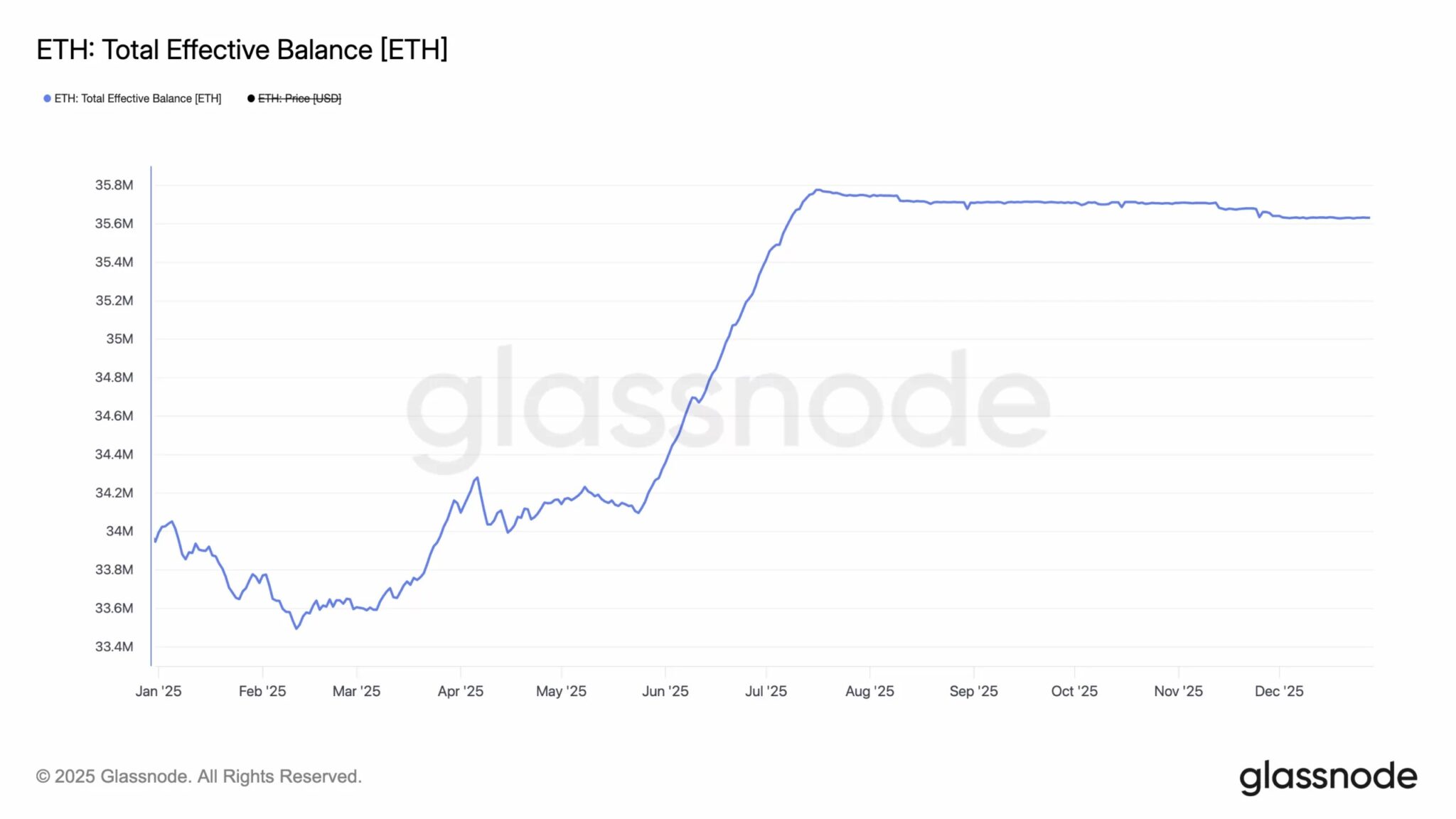
Amount of ETH staked on Ethereum
Meanwhile, the price of ETH stands at $3,015 at the time of writing, up 2.64% over the past 24 hours. Thus, the asset is currently trading down more than 39% from its all-time high (ATH) on August 24.
In any case, the queue to exit staking could continue to shrink over the coming days and potentially even disappear entirely, much like it was at the start of the summer. With the bear market seemingly already upon us, we will be able to take stock of the situation again in the coming months.