Satoshi Nakamoto takes his place opposite the Wall Street Bull. An anonymous figure made of polished metal sits where traditional finance has reigned for decades. Bitcoin, once a fringe phenomenon, has now made its way into the heart of the system it was meant to bypass.
Satoshi Nakamoto sits facing the Wall Street Bull
A new symbolic monument for Bitcoin has been installed on Wall Street, at the New York Stock Exchange (NYSE): a statue of Satoshi Nakamoto, the mysterious creator of the blockchain.
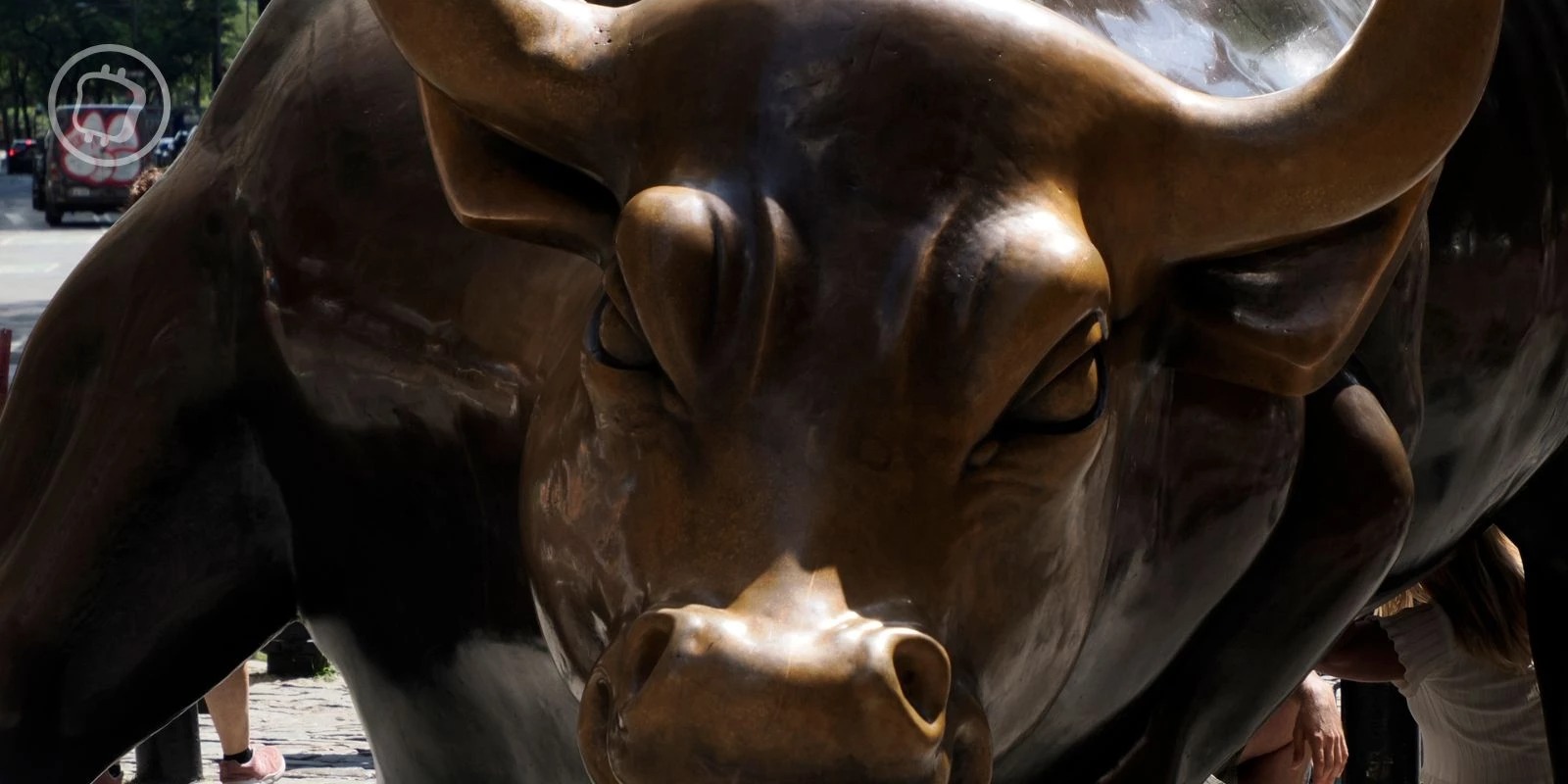
Facing him, standing since 1989, is the bronze bull, the timeless emblem of traditional finance and stock market optimism. A meaningful face-off: the old financial world versus the most significant monetary revolution since the Gold Rush.
The work, designed by Italian artist Valentina Picozzi, alias Satoshi Gallery, depicts the silhouette of a hooded figure with a computer on their lap—the embodiment of Satoshi.
Made of thin slices of polished metal, the statue reveals the void through its structure. Viewed from the front, only the silhouette remains visible, as if drawn in filigree, a metaphor for the lines of code that make up the Bitcoin protocol.
“Satoshi Nakamoto”
Valentina Picozzi – @satoshigalleryTwenty One Capital places a statue of Satoshi Nakamoto, the inventor of Bitcoin, at the NYSE. Its new home marks a shared ground between emerging systems and established institutions. From code to culture, the placement… pic.twitter.com/sTiNq3h5HY
— NYSE (@NYSE) December 10, 2025
Twenty One Capital is installing a statue of Satoshi Nakamoto, the inventor of Bitcoin, at the NYSE. This new location symbolizes common ground between emerging systems and established institutions. From code to culture, this installation embodies an artistic reflection on how new ideas become part of our shared history.
This is the fifth statue in a global project that is expected to include 21 statues, a nod to the cap of 21 million BTC. Currently, there are statues in Lugano, Switzerland; El Zonte (Bitcoin Beach) in El Salvador; Tokyo, Japan; and Hanoi, Vietnam.
Furthermore, the statue’s installation coincides with the anniversary of the launch of the Bitcoin mailing list, initiated by Nakamoto on December 10, 2008.
Since then, Bitcoin has evolved from a fringe experiment to a strategic asset. Today, more than 3.7 million BTC, worth over $336 billion, are held by institutions, companies, and governments.
Jack Mallers and Tether launch their Bitcoin treasury, the first to be listed on the New York Stock Exchange
The statue of Satoshi Nakamoto on Wall Street would not have been created without the involvement of Twenty One Capital (XXI), a recently launched treasury company backed by Jack Mallers, founder of the Strike exchange platform, and Tether, the issuer of the USDT stablecoin.
This new Bitcoin treasury, which now competes with Michael Saylor’s Strategy, aims to facilitate exposure to Bitcoin through more traditional financial channels
But behind this symbolic move lies a fundamental contradiction. Twenty One Capital holds over 43,500 BTC, making it the third-largest private holder of Bitcoin in the world, just behind the mining firm Marathon Digital (53,700 BTC) and Strategy (660,000 BTC).
An impressive feat… but one that raises questions. For these treasury companies, while appearing to be allies of Bitcoin, actually undermine Bitcoin’s philosophy by promoting its custody by trusted third parties. Bitcoin was designed to empower individuals, not to make them dependent on intermediaries once again.
Thus, delegating the custody of one’s BTC to a company amounts to replicating the vulnerabilities of the traditional banking system: exposure to censorship, asset freezes, and seizures under regulatory pressure. This paradox raises a fundamental question: can we truly celebrate the Bitcoin revolution… while centralizing its use?