The cryptocurrency sector is currently undergoing a major regulatory transformation, driven by major jurisdictions such as the European Union and the United States. This situation does not seem to be benefiting the decentralized platform APEX Exchange, which is now on the AMF’s blacklist.
The AMF adds APEX Exchange to its blacklist
Since the beginning of the year, cryptocurrency players based in the European Union have had to comply with the requirements of the Markets in Crypto-Assets (MiCA) regulatory framework. This oversight also involves the Autorité des marchés financiers (AMF) in France.
This body, which is responsible for supervising national financial players, keeps an up-to-date list of the most secure ones, but also of those it considers to be poor performers. The latter are then blacklisted.
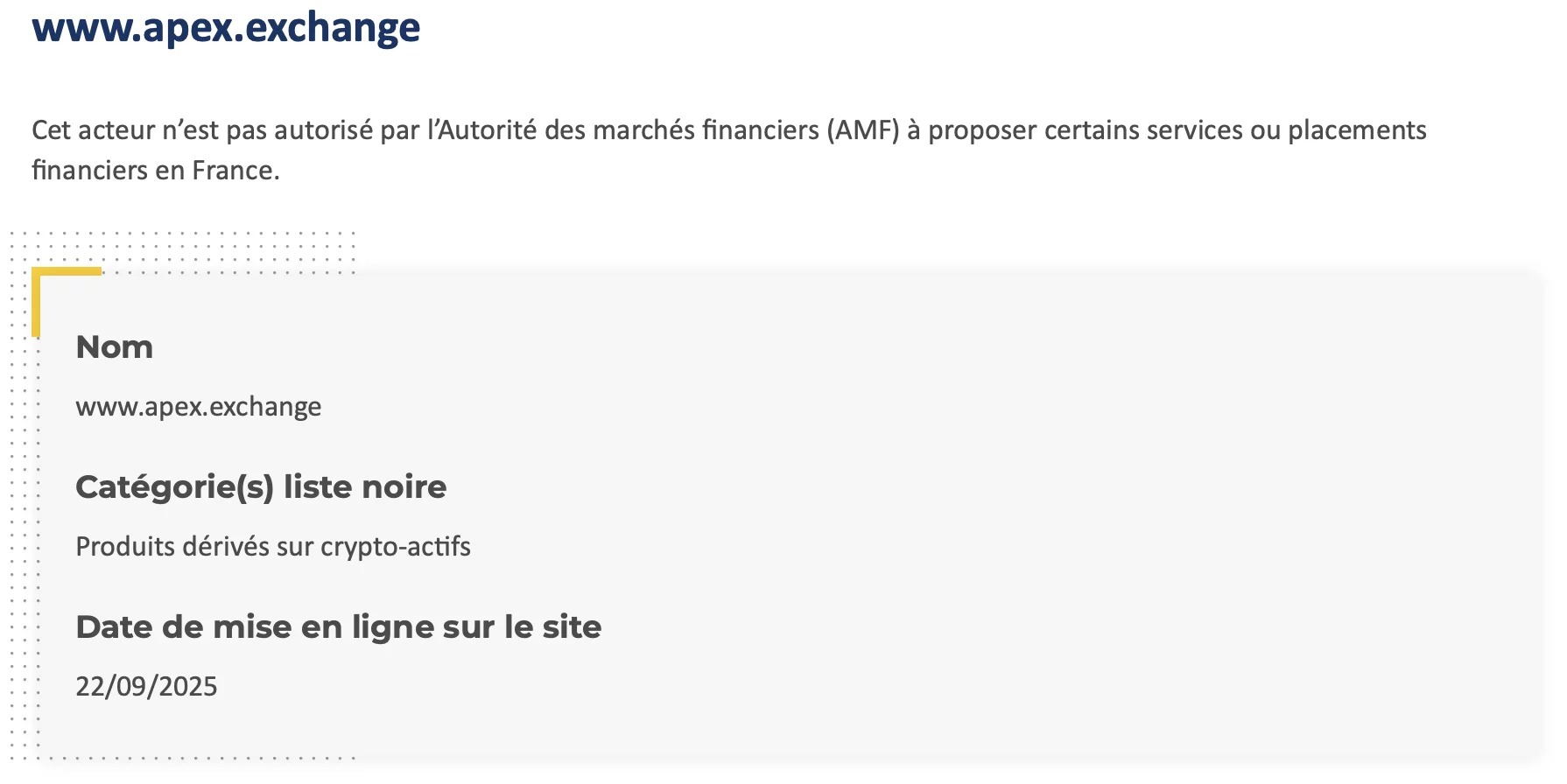
A ban on offering certain financial services or investments in France has just affected the decentralized platform APEX Exchange. This is surprising for a DEX, especially considering that it is part of the Web3 ecosystem of the Bybit cryptocurrency exchange platform, which has been officially compliant with MiCA regulations since last July.
A stance against DEXs dedicated to perpetual contracts?
Could the inclusion of APEX Exchange on the AMF’s blacklist be a direct consequence of the regulatory body’s recent desire to apply the recommendations issued by the European Securities and Markets Authority (ESMA) more strictly? The question remains open.
The removal of this decentralized platform specializing in perpetual contracts marks a significant stance by the AMF in this area. This is particularly true in light of the rise of highly popular competing projects, such as Hyperliquid and Aster. This is a story to follow closely…