
The regulatory landscape is undergoing radical change in the United States, driven by a Trump administration that is favorable to cryptocurrencies. In this context, a bill aims to reconcile the SEC and the CFTC in order to harmonize the supervision of the DeFi and DePin sectors, as well as airdrops.
Towards collaboration between the SEC and CFTC in the United States?
Historically, the Securities and Exchange Commission (SEC) and the Commodity Futures Trading Commission (CFTC) were two US agencies in direct competition for the oversight of the cryptocurrency sector, to the point of hindering its national development.
This is the main reason why former SEC Chairman Gary Gensler attempted to apply the status of financial security (security) across the board in this area. And for good reason, as these financial assets were subject to his exclusive regulatory management.
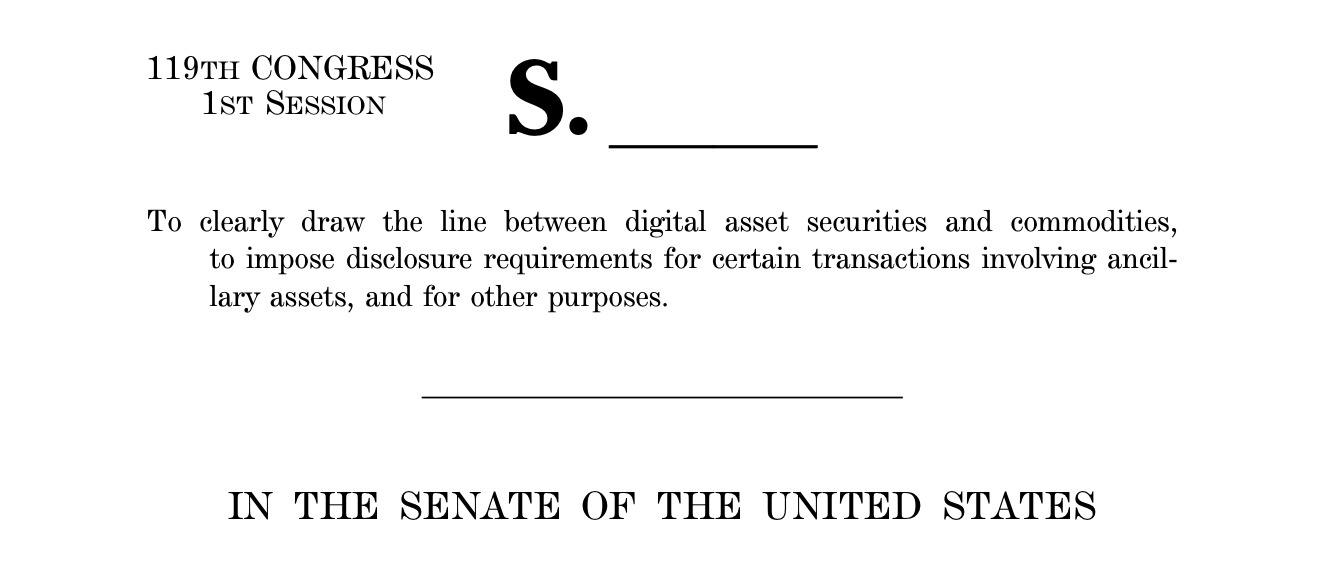
This situation may well be about to change, following the introduction of a Senate bill entitled: Responsible Financial Innovation Act. The goal? Regulatory harmonization that will enable the United States to become the crypto capital announced by Donald Trump during his presidential campaign, according to the new SEC chairman, Paul Atkins.
By working together to align our regulatory frameworks, the SEC and CFTC can reduce unnecessary barriers, improve market efficiency, and create space for innovation to thrive. Our shared goal is to ensure that America remains the global leader in capital markets.
Paul Atkins
A unified regulatory framework for DeFi, DePin, and airdrops
This convergence has already led to recent major decisions, such as the authorization of cryptocurrency trading for US exchanges with non-stop crypto trading hours, and the nationwide opening of prediction markets and DeFi peer-to-peer finance.
However, this Responsible Financial Innovation Act bill also adds some notable new advances, such as easing traditional financial regulations for developers of decentralized exchanges (DEX) or protocols registered within decentralized finance (DeFi). The aim is to promote the effective decentralization of these projects, while avoiding certain abuses such as the lawsuit filed against the developers of Tornado Cash.
Secondly, this bill also seeks to clarify the regulatory treatment of “free distributions” of tokens, more commonly known as airdrops. This area would also include staking rewards, tokens (LSTs) associated with liquid staking, and scheduled distributions that do not constitute an “offer or sale” under the terms of securities regulations.
Finally, a new sector associated with cryptocurrencies is emerging, with decentralized physical infrastructure networks (DePIN). Utility tokens used to run and power these platforms will not be considered securities offerings, provided they meet the necessary decentralization requirements. The limit is set at 20% of the available quantity held by a single entity. Under this bill, the SEC and CFTC are also requesting an in-depth study on the regulatory case for the tokenization of real-world assets (RWA). According to the information available, the idea is not to automatically apply the status of financial securities to them when they are registered on a blockchain, if they are not already subject to this framework in their real versions.