
On Friday, US spot Bitcoin ETFs suffered their second worst day in history with $812.25 million in outflows. However, are these figures really that catastrophic?
Bitcoin ETFs suffer more than $812 million in outflows
Over the course of the week, we saw cryptocurrencies correct somewhat, largely due to Donald Trump’s tariffs and his comments about Jerome Powell, the chairman of the US Federal Reserve (Fed).
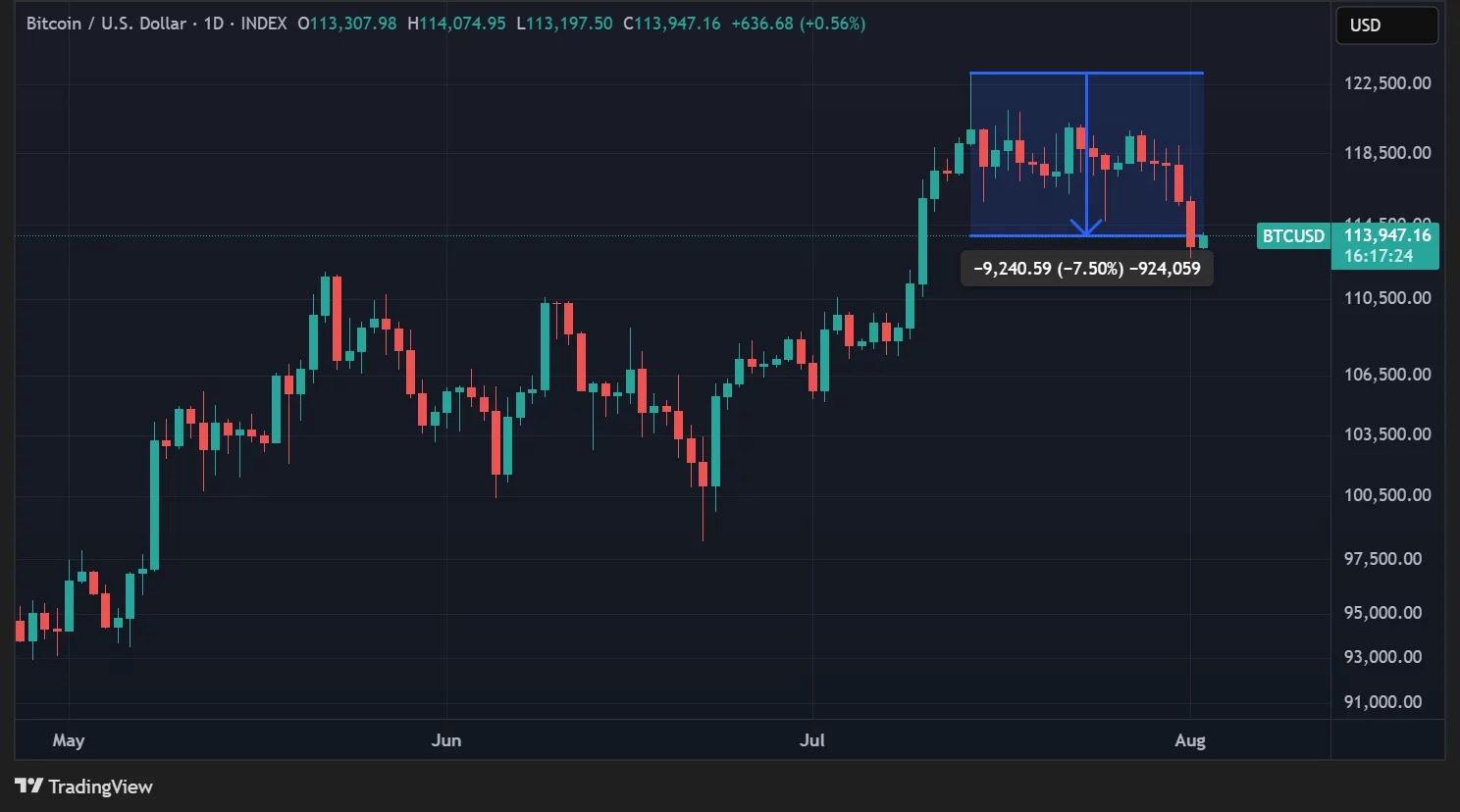
As a result, the price of Bitcoin (BTC) stands at $113,900 at the time of writing, down 0.7% over 24 hours, but also down 7.5% from its latest all-time high (ATH) of $123,000:
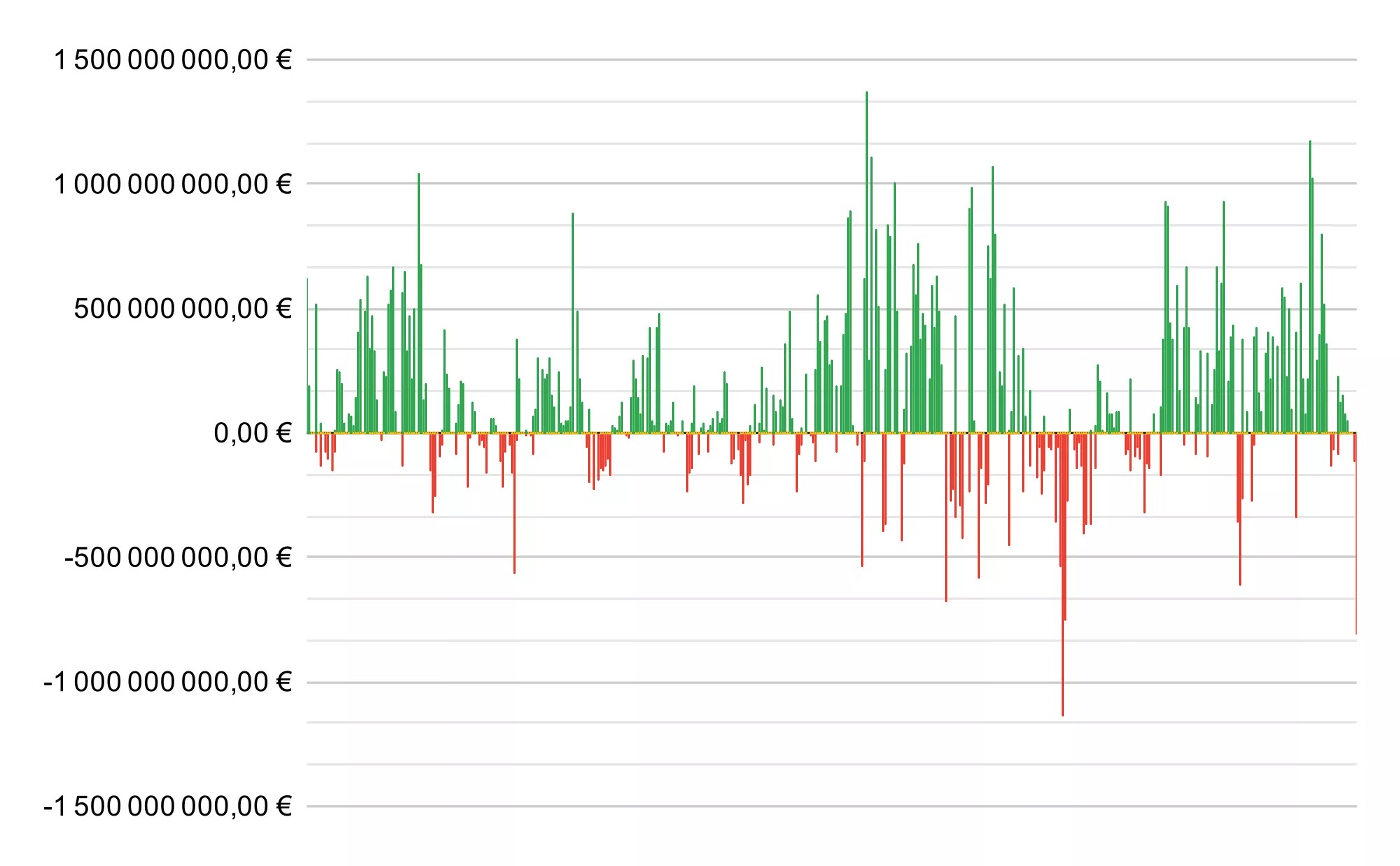
In this context, with Thursday and Friday being particularly bearish days, US spot Bitcoin ETFs recorded their second worst day in history in terms of inflows/outflows.
While the worst day in terms of outflows was February 25, with nearly $1.14 billion, Friday’s session saw approximately $812.25 million in net outflows:
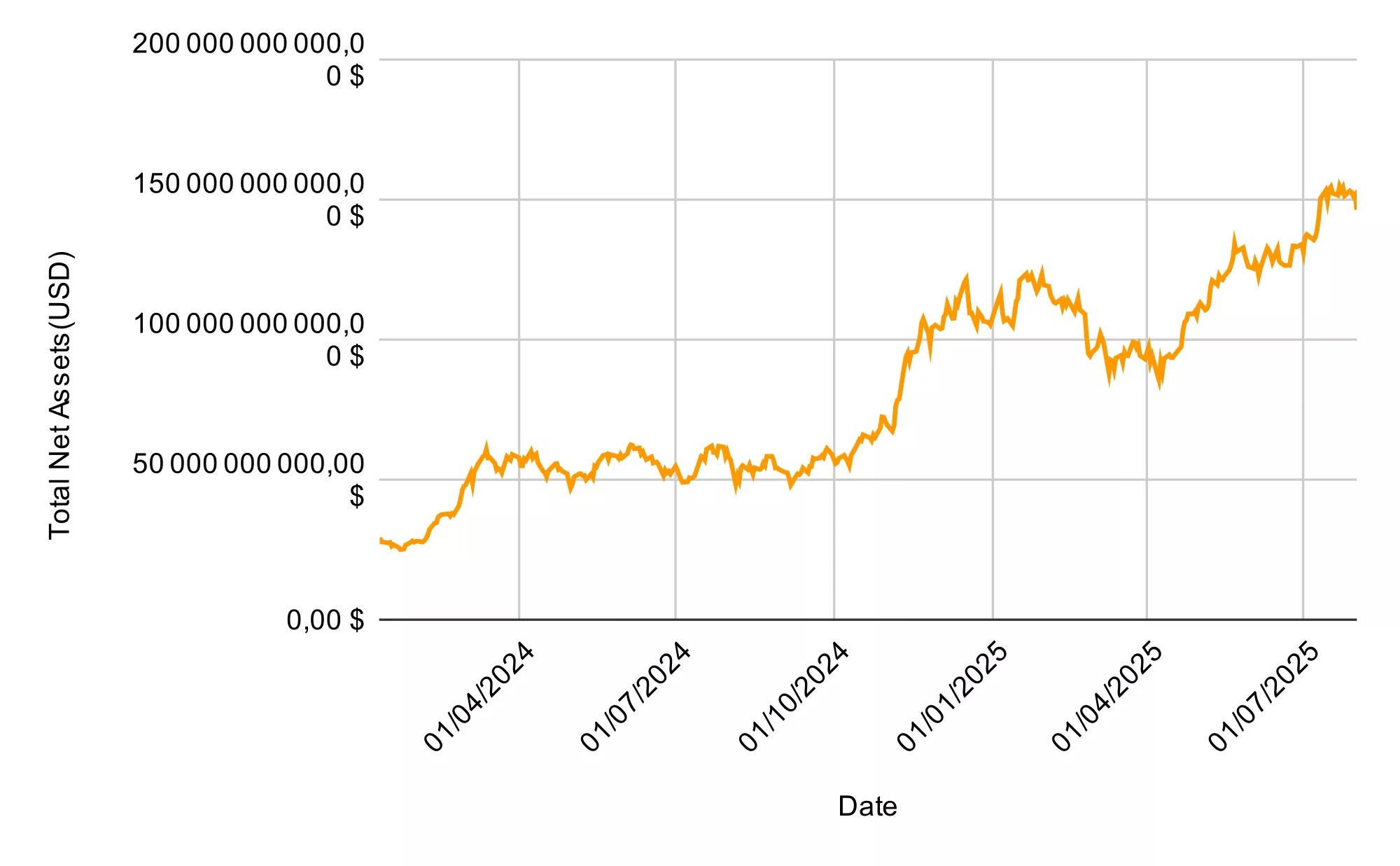
US spot Bitcoin ETFs now have $146.48 billion in net assets under management, down 5.36% from their own ATH on July 22:
To put Friday’s outflows into perspective, it is also interesting to look at these famous net assets not in dollar value, but in bitcoin equivalent. Thus, we find the values below for the closings of the following days:
- July 22 (ATH of net asset value): 1,292,148 bitcoins;
- July 31: 1,304,374 bitcoins;
- August 1: 1,285,506 bitcoins.
In light of this data, the 5.36% decline from the aforementioned ATH in net asset value is now only 0.51%. Furthermore, while the $812.25 million in net outflows on Friday suggest a 3.64% decline in dollar terms compared to Thursday, when reported in Bitcoin, this decline is only 1.45%.
This difference can therefore be explained by the two variables that determine whether ETFs will record a day of gains or losses:
- The price of BTC;
- Purchases or sales of ETF shares.
As a result, we can see that in this case, there were indeed more sales of ETF shares than purchases, but in smaller proportions than the dollar figures might suggest, as the fall in BTC accentuated the imbalance in the balance sheet.