Top Crypto Performers for November
With November marked by a more than 13% drop in the price of Bitcoin, few cryptocurrencies managed to perform well. However, a few die-hard altcoins managed to stand out: find out which ones and the reasons behind their outperformance, bucking the overall market trend
A tough November for the crypto market
While Bitcoin’s price posted a negative return of -13% over the past 30 days, Ether, for its part, saw a steeper decline of approximately -17%.
Few altcoins have managed to perform well under such conditions. And yet, some cryptocurrencies have managed to post respectable returns.
Among the top 5 best-performing cryptocurrencies in November are KAS, XMR, QNT, WLFI, and RAIN:

5 – Kaspa (KAS): +17.3%
Launched in November 2021, the Kaspa project draws heavily on Bitcoin, whether in terms of principles, methodology, or its proof-of-work (PoW) environment.
In fact, Kaspa is based on the GhostDAG protocol, which extends the Nakamoto consensus to a Directed Acyclic Graph (DAG) system, with the goal of making it more scalable than its first implementation, Bitcoin.
Over the past 30 days, the price of the KAS cryptocurrency has risen by more than 17%. Among the potential reasons for this performance is the launch of Kaspa’s first decentralized bridge, which greatly improves its interoperability with EVM blockchains.
Following this major milestone, Dymension has integrated KAS as a base asset. In other words, Dymension’s rollapps can now choose to use KAS to pay gas fees.
In summary, Kaspa has made a significant technological advancement, combined with new demand for KAS.
4 – Monero (XMR): +18.2%
Monero is a blockchain focused on anonymity, where transactions are made untraceable through the use of various cryptographic techniques. Monero’s native cryptocurrency shares the same name as the blockchain and is known by the ticker XMR.
Over the past 30 days, the price of XMR has surged by more than 18%.
Although the reasons behind this price surge remain unclear, it is likely that Monero benefited from a rotation of capital. Indeed, the “privacy coin” narrative was in full swing during October, particularly with Zcash, which posted exceptional performance over that period.
Thus, it is possible that capital that had shifted away from Zcash has now flowed back into Monero. Indeed, XMR remains the crypto with the highest market capitalization in the privacy coin sector. It therefore remains a “safe bet” in the eyes of investors, regardless of whether there is hype surrounding a particular narrative or not.
3 – Quant (QNT): +23.5%
Quant is a project focused on a very specific segment: institutional interoperability. Unlike most blockchains, which seek to attract users or developers, Quant directly targets banks, companies, and financial infrastructures that want to connect their existing systems to different blockchains without having to rebuild their entire architecture.
Its flagship product, Overledger, is not a blockchain but a multi-chain operating system that allows interaction with multiple public and private blockchains as if they were part of a single environment.
Over the past 30 days, the price of the QNT cryptocurrency has risen by 23.5% .
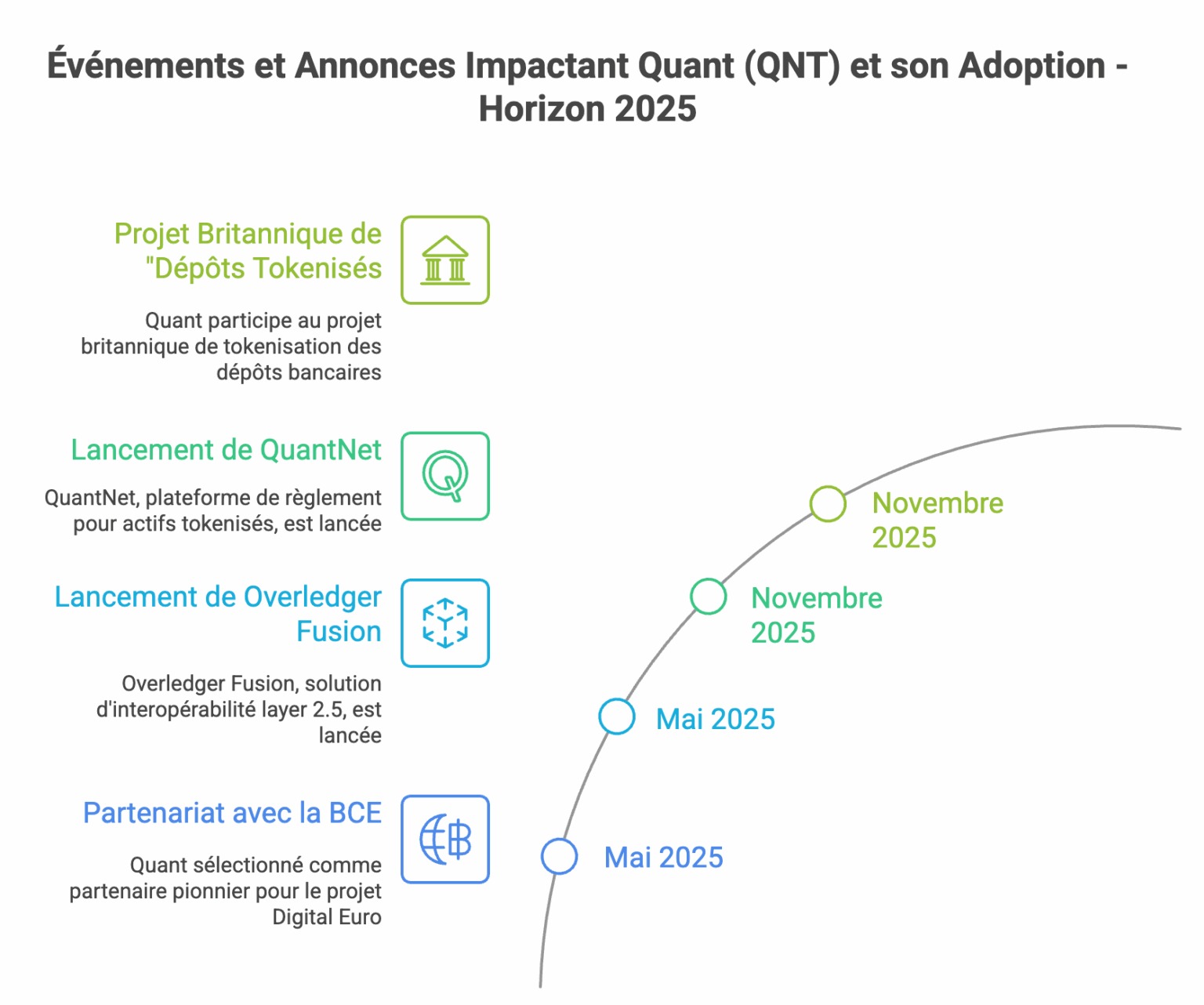
Chart showing the key milestones of the Quant project in 2025
Among the potential reasons for QNT’s performance, we can notably cite Quant’s collaboration with various institutions, such as the European Central Bank (ECB) on the digital euro (CBDC) project. More recently, Quant announced its participation in a UK tokenized deposits project launched by a banking consortium in the United Kingdom.
However, a word of caution: beyond the hype, it is difficult to analyze the actual growth or demand for this type of project.
2 – World Liberty Financial (WLFI): +26.7%
World Liberty Financial is a decentralized finance (DeFi) protocol launched in 2024, closely linked to U.S. President Donald Trump and his family. Presented as an attempt to “improve the dollar,” the project consists of two pillars: a stablecoin, the USD1, backed by the U.S. dollar, and a governance token, the WLFI.
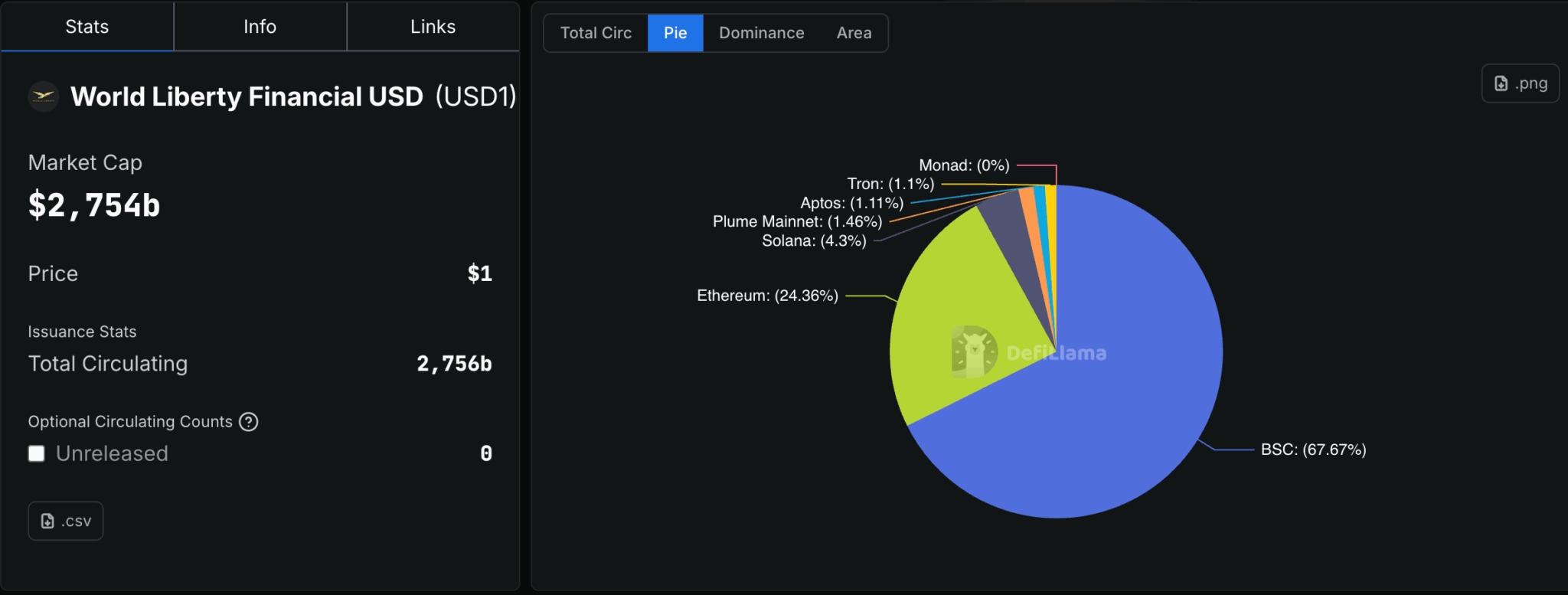
According to data from the DeFiLlama analytics platform, the USD1 stablecoin is now the 7th most capitalized stablecoin, with $2.75 billion.
Beyond this fundamental data, the project recently announced a buyback and burn program for its WLFI token. This type of mechanism is generally very popular with investors, who may view it as a form of value redistribution.
Over the past 30 days, the price of the WLFI cryptocurrency has risen by 26.7%.
1 – Rain: +136.2%
Rain Protocol is a decentralized prediction market built on the Arbitrum blockchain and interoperable with the Base, BNB Chain, and Ethereum blockchains. It aims to be the “Uniswap of prediction markets”: anyone can create markets (public or private) on a wide range of events, without prior authorization.
The RAIN token is the protocol’s native cryptocurrency: it is used to participate in the ecosystem, to pay for or participate in markets, and for governance. Currently in beta, Rain touts a permissionless model, combining resolutions via oracles and artificial intelligence (AI).
Over the past 30 days, the price of the RAIN token has skyrocketed, posting a +136% gain during this period.
Among the potential reasons for this surge is the fact that a Nasdaq-listed company chose to invest $212 million in the RAIN token. Indeed, prediction markets are on the rise, as evidenced by recent funding rounds for the two industry leaders, Polymarket and Kalshi.
However, we recommend exercising caution regarding the RAIN token. Companies that adopt a crypto treasury system often have a failing business model, and these strategic shifts are frequently “last-ditch” attempts “last-ditch effort” to stay afloat.
Furthermore, if the company decides to abandon its crypto treasury project, the RAIN token could be significantly impacted. p>
Honorable Mentions
Among the cryptocurrencies not included in the previous ranking—due to their market capitalization falling outside the Top 100—we can mention:
The TEL token from the Telcoin project, up 100% over the last 30 days.
The MYX token from the MYX Finance decentralized exchange (DEX) for perpetual contracts (perps), with a 66.4% return over the last 30 days.
The BAT token from Basic Attention, the native token of the Brave browser, used to reward users for their attention and to fund a decentralized advertising model, with a 46% return over the past 30 days.
Token unlocks that could shake up the crypto market in December 2025
Every month, regardless of market conditions, the same pattern repeats itself. Millions of new tokens are released onto the market, potentially putting selling pressure on the price of the relevant cryptocurrency. Find out which token unlocks to watch in December to stay one step ahead.
The 5 crypto token unlocks to watch in December
While most altcoins have underperformed over the past 30 days, a well-oiled mechanism could exacerbate this trend: the infamous token unlocks.
Indeed, as usual, millions of tokens will be released in December.
Although a token unlock doesn’t necessarily mean a drop in the price of the asset in question, this event does, at the very least, increase supply relative to demand, which can result in selling pressure.
This month, there are significant token unlocks to be aware of and monitor, particularly for the ENA, APT, PUMP, STRK, and ASTER tokens:
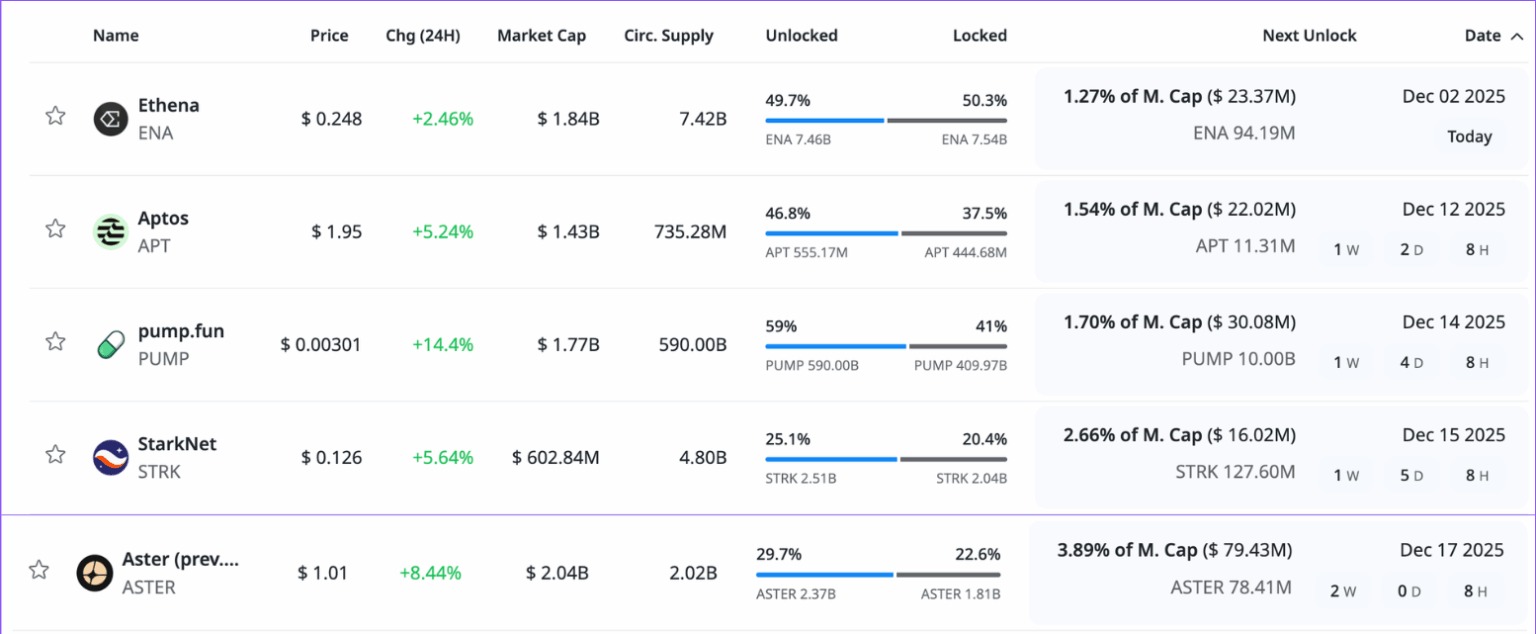
Token unlocks to watch in December
Ethena (ENA)
- Quantity: 94.19 million ENA tokens;
- Value: $23.37 million;
- Unlock date: December 2;
- Unlocked quantity as a percentage of circulating supply: 1.27%.
Ethena is a decentralized finance (DeFi) protocol that offers an alternative to traditional stablecoins through a product called USDe, a “synthetic” stablecoin pegged to the dollar. p>
Unlike reserve-backed stablecoins (such as USDT or USDC), USDe is kept stable through a hedging strategy based on crypto derivatives.
The ENA token is the governance token of the Ethena protocol. It allows holders to participate in decisions regarding the protocol’s development and to earn staking rewards.
Over the past 30 days, the price of the ENA token has fallen by approximately 30%. The project is struggling to recover from the liquidation event that occurred on October 10. Since that event (indicated by the white arrow on the chart), Ethena’s flagship product, USDe, has fallen by more than 50% in terms of market capitalization:
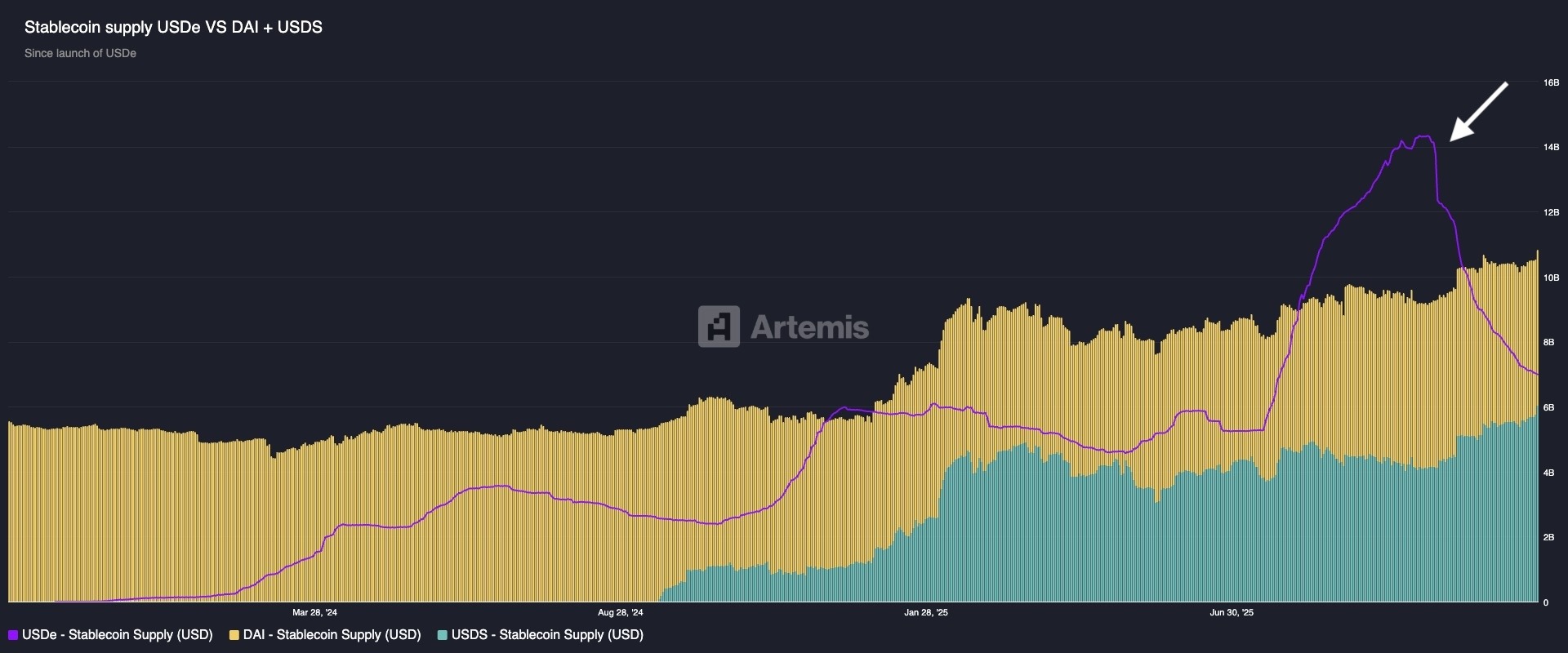
Chart showing the market capitalization of USDe (in purple), DAI (in yellow), and USDS (in blue)
On December 2, Ethena will release $94.19 million worth of ENA tokens, representing approximately $23.4 million, or 1.27% of its total market capitalization.
Aptos (APT)
- Quantity: 11.31 million APT tokens;
- Value: $22.02 million;
li> - Unlock date: December 12;
- Amount unlocked relative to circulating supply: 1.54%.
Aptos is a Layer 1 blockchain born from the ashes of Diem, a crypto project abandoned by Facebook (Meta) under regulatory pressure. Based on the Move programming language, Aptos is an ultra-fast blockchain. It offers transaction fees significantly lower than those of the Ethereum blockchain, making it well-suited for the high-frequency trading sector.
Over the past 30 days, the price of the APT cryptocurrency has fallen by more than 39%. Although some on-chain metrics for the Aptos blockchain are relatively encouraging, selling pressure remains higher than demand, which is automatically driving the price down.
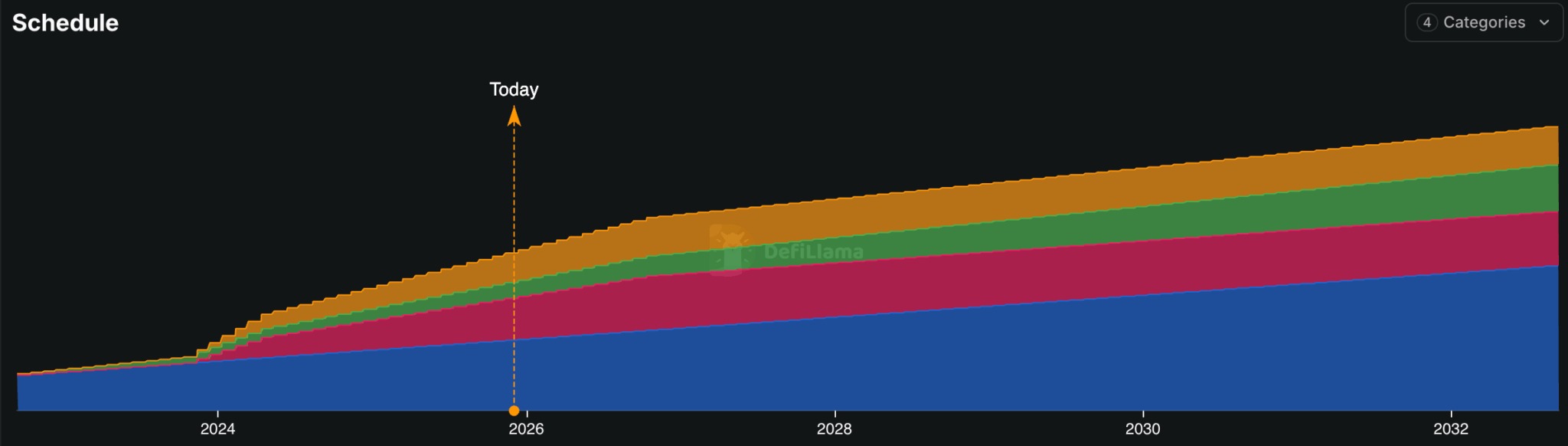
Chart showing APT token unlocks
As we can see in the chart above, new APT tokens are entering the market every month, contributing to this imbalance between supply and demand. On December 12, 11.31 million APT tokens will be unlocked, representing over $22 million and 1.54% of its market capitalization.
Pump.fun (PUMP)
- Quantity: 10 billion PUMP tokens;
- Value: $30.08 million;
- Unlock date: December 14;
- Amount unlocked relative to circulating supply: 1. 7%.
Pump.fun is a popular token launchpad platform—primarily for memecoins—on the Solana blockchain.
With the crypto market currently performing poorly, speculation—particularly on protocols like Pump.fun—is being impacted. However, the project remains one of the most undervalued to date, given its Market Cap/Revenue (MC/R) ratio of 4.4.
In other words, the Pump.fun project injects about a quarter of its market capitalization into the token each year through a buyback mechanism (purchasing tokens on the market). This mechanism, highly valued by investors, has the benefit of reducing supply, which can lead to price appreciation or, at the very least, mitigate the impact of token unlocks.

On December 14, 10 billion PUMP tokens will be unlocked, representing over $30 million, or 1.7% of its market capitalization. Over the past 30 days, the price of the PUMP cryptocurrency has fallen by nearly 30%.
StarkNet (STARK)
- Quantity: 127.6 million STRK tokens;
- Value: $16.02 million;
- Unlock date: December 15;
- Amount unlocked relative to circulating supply: 2.66%.
- Quantity: 78.41 million ASTER tokens;
- Value: $79.43 million;
- Unlock date: December 17;
- Amount unlocked relative to circulating supply: 3.89%.
- A value of 1 indicates that the market’s bullish momentum is reaching its peak, with very high profitability and intense profit-taking activity, which occurs near local and cyclical peaks;
- A value of -1 indicates that bearish market momentum is reaching its limit, with very low profitability and intense stop-loss activity, which helps form local and cyclical lows.
- Above 1, short-term investors are realizing profits amid an optimistic and bullish environment;
- Below 1, short-term investors are realizing losses amid a pessimistic and bearish environment.
ul>
StarkNet is a scalability solution for the Ethereum blockchain, based on the Cairo language. The project also aims to expand into the Bitcoin ecosystem, particularly to develop Bitcoin finance (BTCFi).
StarkNet is one of those projects heavily overfunded by venture capital (VC) firms. During the project’s various funding rounds, over $282.5 million was raised. A hefty sum, which comes with its own set of trade-offs.
In fact, the STRK token is subject to high inflation due to the project’s monthly token unlocks, which creates a gap between the crypto’s market capitalization and its price. While the total market capitalization increases as unlocks occur, the dilution automatically drives the price of the STRK token downward:
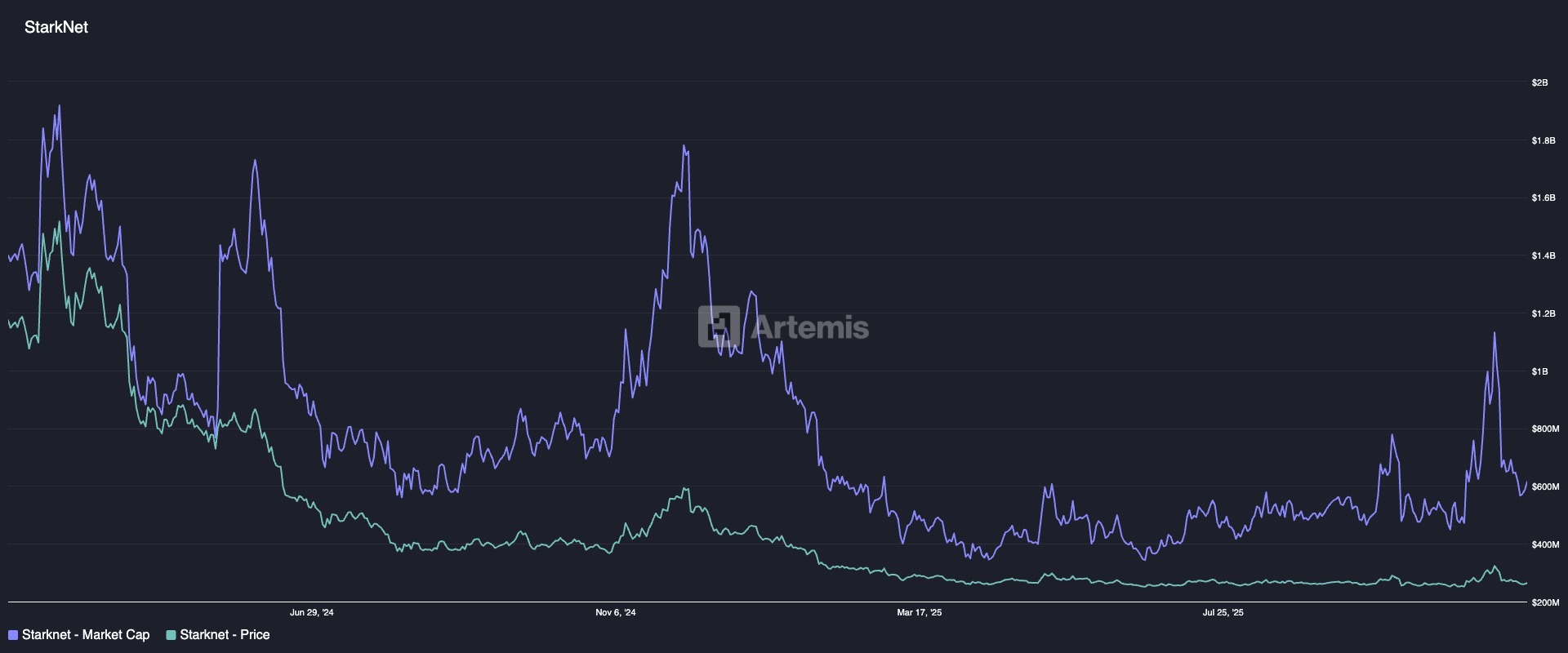
Chart showing STRK’s market cap (in blue) and its price (in green)
On December 15, 127.6 million STRK tokens will be released, representing over $16 million, or 2.66% of its market capitalization. Over the past 30 days, the price of STRK has risen by 18%.
Aster
Aster is a decentralized exchange (DEX) specializing in the trading of perpetual contracts (perps) , but which also offers spot trading and tokenized stocks.
Publicly backed by Binance founder Changpeng Zhao (CZ), Aster has quickly established itself as a credible alternative to the industry leader, Hyperliquid.
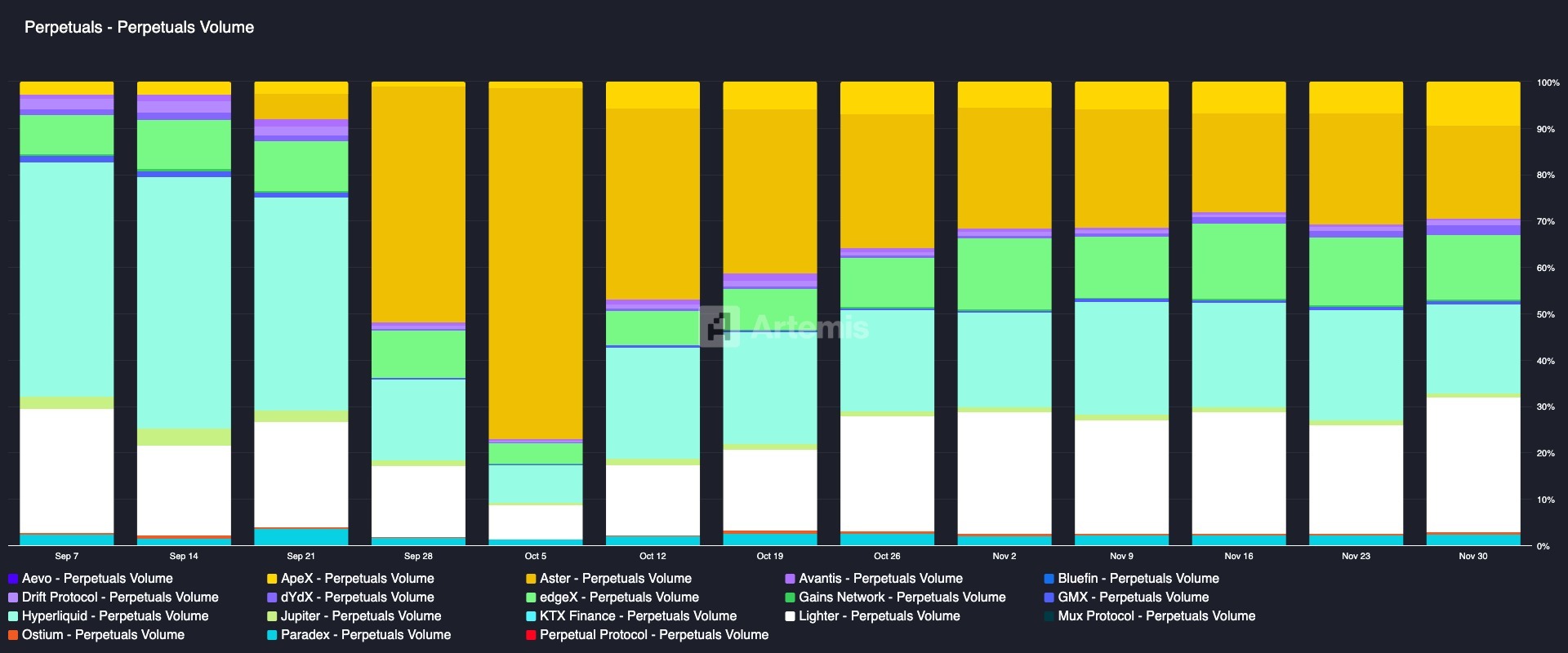
Driven by a wave of speculation surrounding its airdrop, Aster quickly captured significant market share from Hyperliquid. Since the hype has died down, Aster accounts for between 20% and 25% of trading volume across all DEX perps.
By comparison, Hyperliquid now holds a similar market share.
On December 17, Aster will release 78.41 million tokens, representing 79. 43 million dollars and 3.89% of its market capitalization. Over the past 14 days, the price of the ASTER cryptocurrency has fallen by 20%.
Honorable Mentions
Other major token unlocks to watch in December include:
The Layer 1 blockchain Sei, which will release 95.15 million of its eponymous tokens on December 15, representing nearly $13.3 million, or 1. 49% of its market capitalization.
The Layer 2 blockchain Arbitrum, which will release 92.63 million ARB tokens on December 16, representing nearly $20.2 million, or 1.65% of its valuation.
Merlin Chain, a Layer 1 blockchain for Bitcoin, will release 36.14 million MERL tokens on December 19, representing $12.16 million, or 3. 32% of its market capitalization.
The LayerZero project will release 24.68 million ZRO tokens on December 20, representing $34.44 million, or 10.3% of its valuation.
The Humanity Protocol project will release 133.54 million H tokens on December 25, representing over $16.5 million, or 7.32% of its market capitalization.
The Layer 1 Plasma project, which specializes in stablecoins, will release 88.88 million XPL tokens on the same day, representing nearly $16.5 million, or 4.94% of its valuation.
The Layer 2 protocol Optimism will release 32.21 million OP tokens on December 31, representing $10.38 million, or 1.7% of its market cap.
BTC, SOL, ETH, SUI, LINK: The crypto market is back in the green
In the wake of BTC returning to positive territory, the crypto market has resumed its upward trend over the past 24 hours. A look at the key performances.
The crypto market is regaining momentum, following BTC’s rise
Over the past 24 hours, the price of BTC has regained momentum, climbing back above $93,000 per unit after a 6.5% increase.
For now, no clear news appears to account for the move, other than a brief respite typical of those that follow significant declines. As of now, the asset remains down just over 26% from its all-time high (ATH) of $126,000 on October 6:

BTC price (daily data)
Among the top 10 cryptocurrencies, a few stand out in particular, such as ETH, which has reclaimed the $3,000 mark after an 8.7% rise, SOL, up 10.3% over the past 24 hours to $142, and ADA, at $0.43 with a 10.4% gain.
When expanding the search to the top 100 cryptocurrencies, certain ones stand out in particular, such as SUI and LINK:
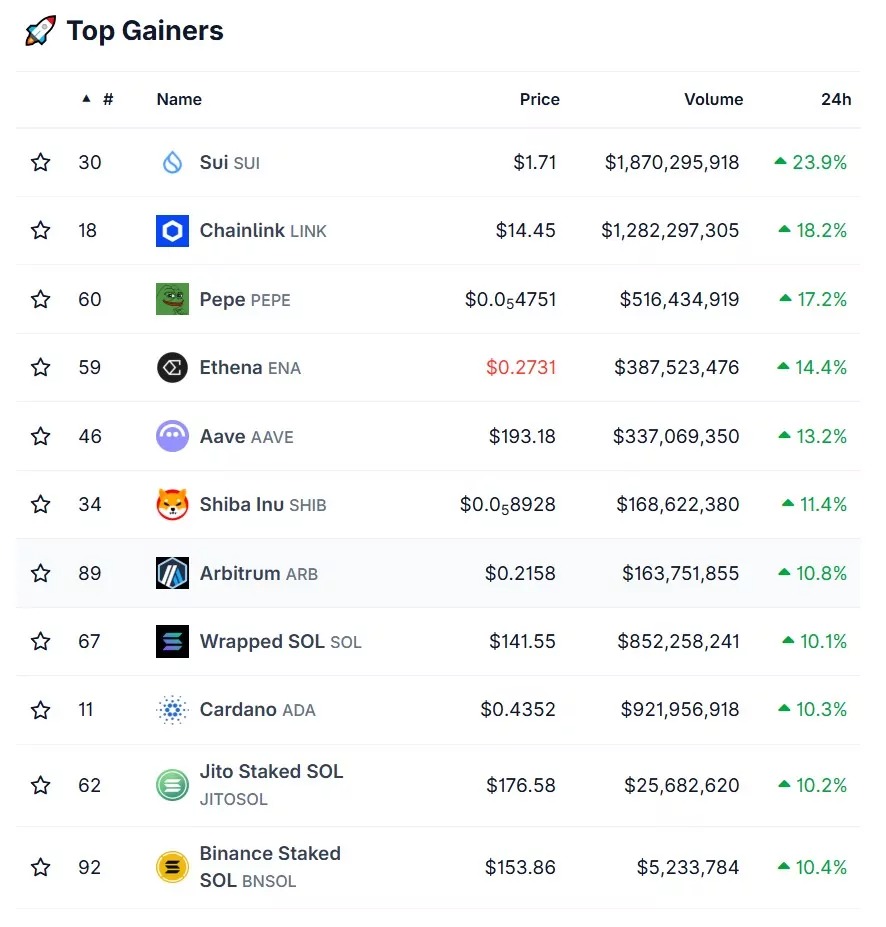
Top gainers among the top 100 cryptocurrencies
Regarding these outperformances, we can notably highlight the launch of Grayscale’s GLNK spot ETF for LINK, as well as Coinbase’s acquisition of a “Virtual Currency Business Activity” license in New York State, allowing it to offer SUI trading to investors in that state.
As for liquidations, they have been insignificant, totaling $484.4 million over the past 24 hours, with more than 84% of that amount coming from short positions.
As BTC wrapped up its worst November since 2018, the 17.67% decline also marks the steepest monthly drop since June 2022. In the coming days, we’ll see whether this resurgence in the crypto market translates into a lasting momentum or turns out to be a “Dead Cat Bounce.”
Bitcoin (BTC): Lack of Spot Demand? On-Chain Analysis with Prof. Chaîne
Recent Bitcoin on-chain data points to sustained bearish momentum across both short- and long-term time frames. With near-zero inflows in late November and early December, we cannot expect spot BTC ETFs to significantly drive a Bitcoin rebound. Find out what the on-chain analysis reveals.
Bitcoin’s Plunge
As the BTC price struggles to stay above $90,000, the likelihood of a dead cat bounce is growing.
Indeed, ever since the market entered bear market territory, demand—particularly in spot markets—has been lacking, preventing Bitcoin from staging a solid rebound.
What do recent flows tell us about market participants’ behavior? Let’s take a look together!

Figure 1: Daily BTC Price
Sustained bearish momentum
November 2025 saw a significant decline ( -17.5%) for the BTC price, similar to February of the same year.
While the magnitude of this decline remains moderate compared to previous bear markets, the impact on investor sentiment remains significant, with sentiment shifting from euphoria to sustained pessimism in just a few weeks.
This context prevents investors from maintaining a bullish bias, , which is reflected in the supply and demand flows across the various BTC spot and futures markets.
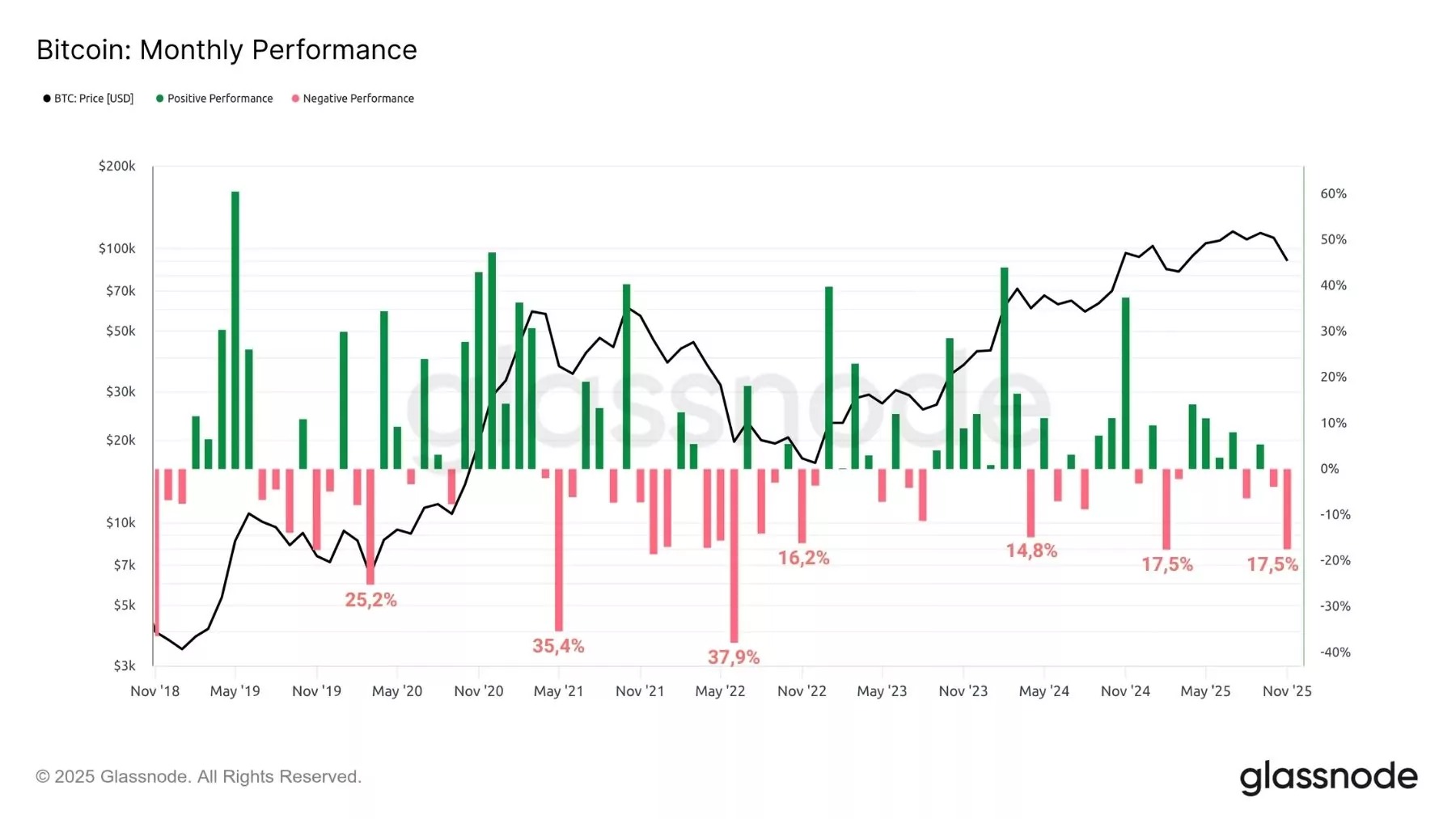
Figure 2: Monthly BTC Performance
The Bitcoin Momentum Oscillator (BMO) on-chain model, mentioned in our previous analyses, aggregates market profitability signals to estimate BTC’s cyclical position and the progress of the current momentum.
Since early November, the BMO has registered a value of -0.33, a moderate bearish signal indicating that BTC’s long-term trend continues to deteriorate.
Historically, these transitions into bearish territory have coincided with the end of uptrends in the Bitcoin market, giving way to a prolonged period of price decline.

Figure 3: Bitcoin Momentum Oscillator Model
Regarding recent momentum, the STH-SOPR ratio tracks the spending behavior of recent entrants to gauge the strength of short-term momentum.
With this indicator remaining below 1 since the price fell below the $100,000 threshold, short-term momentum remains bearish, and short-term investors are unable to get their heads above water.