While Tether is already known for generating significant profits through its USDT stablecoin, it has once again demonstrated this with $10 billion in profits since the start of the year. Let’s take a closer look at these impressive figures.
Tether Posts Record Profits for the First Three Quarters of 2025
On Friday, Tether released financial figures for the third quarter, revealing that the company has generated more than $10 billion in profits since the start of the year:
At the end of the third quarter of 2025, cumulative net profit since the start of the year exceeded $10 billion. This result confirms Tether’s position among the most profitable and financially sound private companies. At the same time, the company continues to invest in the development of its digital currency ecosystem, which now has more than 500 million users worldwide.
Of course, most of these profits are attributable to the USDT stablecoin, which has a market capitalization of more than $183 billion at the time of this writing. With $135 billion in U.S. Treasury bonds as of September 30, Tether was also the 17th-largest holder of Treasury bills in the world.
For his part, Paolo Ardoino, Tether’s CEO, views the company he leads as a “pillar of stability”:
Tether is a pillar of stability in the financial and technological ecosystem. Our steady growth and rigor demonstrate that Tether not only meets global demand but also helps build confidence in the broader digital economy.
According to the latest report from the accounting firm BDO, the company now holds $181.22 billion in assets, and it is also worth noting that its precious metals holdings now total $12.92 billion:
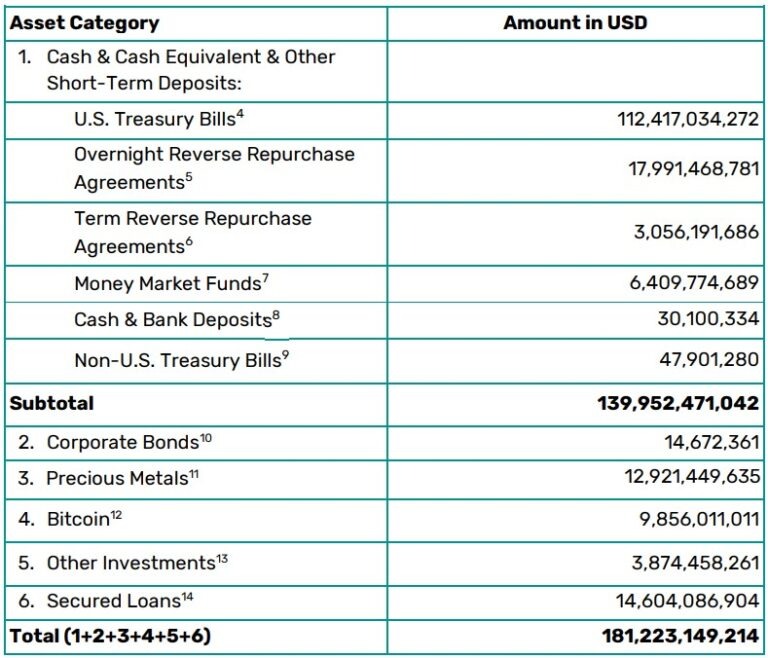
Tether’s Assets
Earlier this year, we took a look at the financial empire Tether is building. It spans many areas beyond stablecoins, ranging from artificial intelligence to sports, social media, and even agriculture.
With such profitability, there is no doubt that the “other investments” line is set to grow over the next few years, which could allow the company to increasingly decouple its revenue from interest earned on U.S. bonds—the profitability of which is subject to the monetary policy of the U.S. Federal Reserve (Fed).