
Bitcoin has been navigating uncertain waters since its last all-time high in early October. This situation is not good news for the leader in spot Bitcoin ETFs, BlackRock’s IBIT, which has set a new record with six consecutive weeks of net outflows.
BlackRock’s IBIT: 6 Consecutive Weeks of Net Outflows
Since reaching its all-time high of around $126,000 on October 6, Bitcoin has entered a concerning and sustained downtrend toward the $90,000 level. The BTC price is currently hovering around this level, with no real certainty about its future direction.
This situation inevitably impacts the U.S. spot Bitcoin ETF market, particularly given that these ETFs are held much more widely by retail investors rather than the so-called institutional investors, who are generally considered less volatile.
As a result, net outflows in this market have been accumulating week after week, reaching a critical threshold in early December. In fact, the iShares Bitcoin Trust (IBIT), managed by global asset management leader BlackRock, is poised to set a new record—one that isn’t exactly positive.
And for good reason: for five consecutive weeks now, the fund has been experiencing massive and steady redemptions, estimated at more than $2.7 billion in total. The problem? A sixth consecutive week of redemptions appears to be on track this Friday, December 5, with the risk of marking its longest streak of weekly outflows since its launch in January 2024.
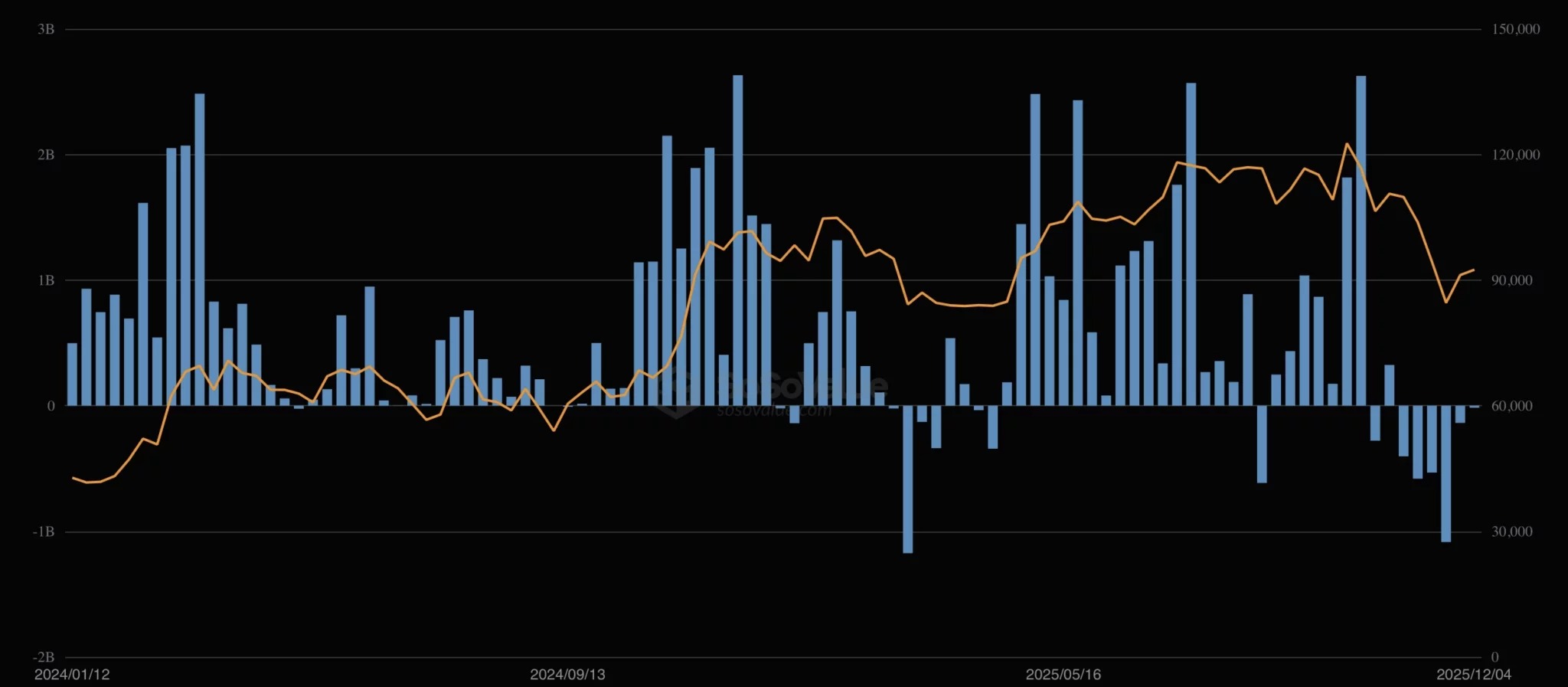
BlackRock’s IBIT ETF posts 6 consecutive weeks of net outflows
Downtrend or year-end trap?
By comparison, the second-largest spot Bitcoin ETF in this market, Fidelity’s FBTC, posted estimated net outflows of $534 million over the same period, though with a significant reversal over the past two weeks, which saw cumulative net inflows of $270 million.
Nevertheless, the ongoing outflow from BlackRock’s IBIT is prompting Bloomberg analysts to remain cautious, as they see this as a sign that “institutional appetite for the world’s largest cryptocurrency remains weak, even as prices stabilize.”
This view is also shared by the analytics firm Glassnode, which sees this accumulation of outflows as “marking a clear reversal from the pattern of persistent inflows that supported prices earlier this year, and reflecting a cooling off in new capital allocations to the asset.”
It must be said that Bitcoin’s current situation has left many analysts quite perplexed, caught between a repeat of its old cyclical model based on halvings—which seems to have become obsolete—and the prospect of it evolving toward a model more akin to traditional assets, which could very well become the trap as the year comes to a close.